E-Bike Service Checklist: A Parent's Summer Guide
Use this e-bike service checklist to get your teen's bike summer ready: brakes, tyres, lights, battery and helmet checks, plus when to see a bike shop.
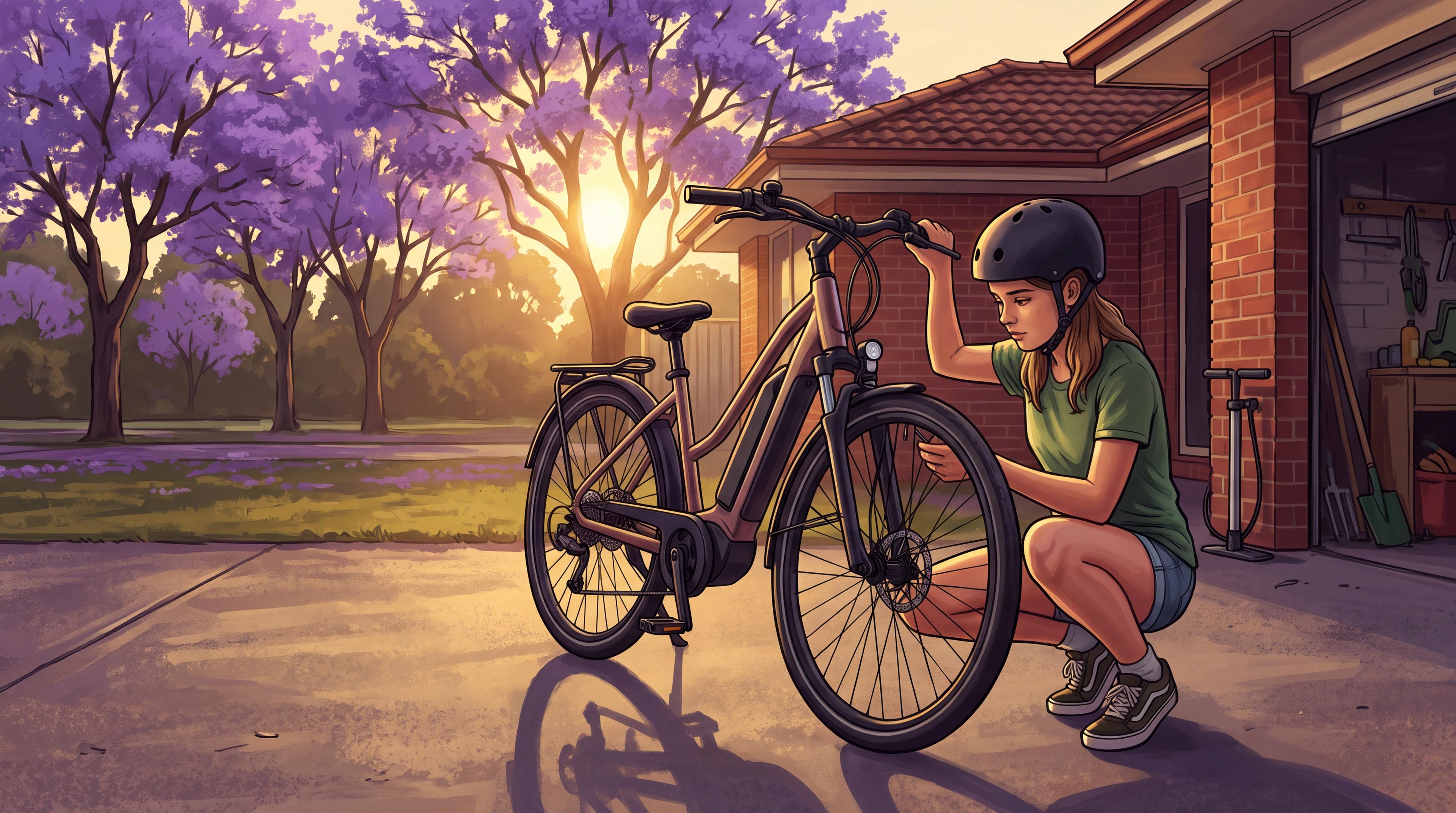
An e-bike service checklist can help you spot maintenance issues on your teen's bike before the summer holidays. If your teen plans to ride more over the break, and the bike has not been ridden much for months, it may need some attention before its next ride. You can check for some obvious problems at home. Here's what to look at together, what to leave to a bike shop, and what NSW rules say the bike must have.
How often does an e-bike need a service?
Bicycle Network recommends that bikes in regular use get a service every year to replace worn out parts. It also says bikes that haven't been ridden for a long time need a service to replace rusted parts and perished tyres (Bicycle Network). Follow the bike and component manufacturers' servicing schedules as well. Basic checks between services can help you notice problems, but they don't replace professional servicing.
If the bike gets used for school most days, check when its next service is due under the manufacturer's schedule. If the bike has been unused for a long time, follow the manufacturer's return-to-use checks, and arrange a professional service before riding if its condition or service history is uncertain. Have any safety concerns checked before riding again.
The home check you can do together
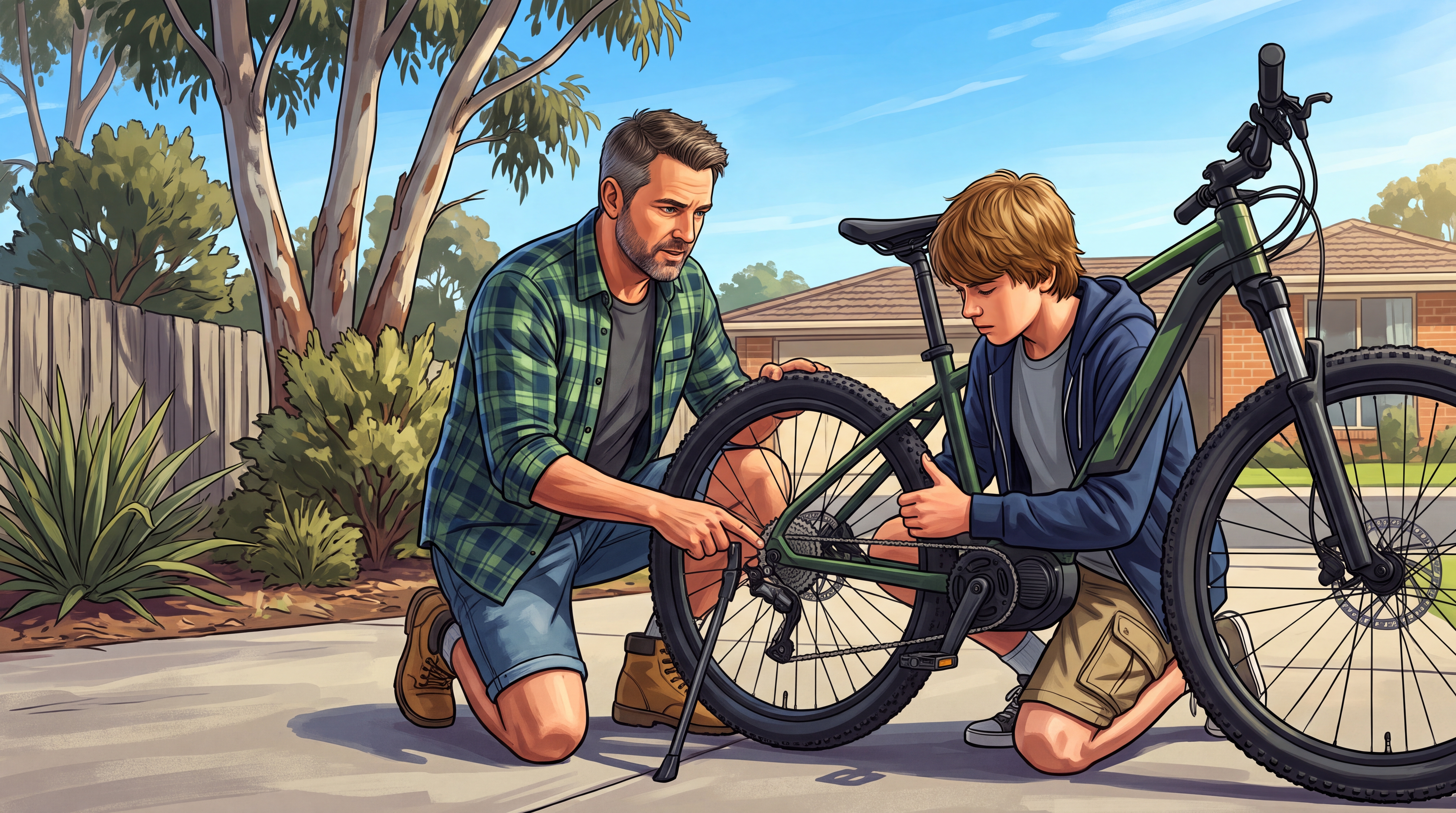
Bicycle Network uses a simple routine called the ABC Quick Check (Bicycle Network). Use it alongside your bike manufacturer's pre-ride instructions, and learn it side by side with your teen.
Before any hands-on check, follow the bike and motor manufacturers' instructions to stop the motor starting. These may require switching the system off and removing a removable battery. Don't try to remove a battery that looks damaged. Keep hands clear of moving parts, let brake discs and callipers cool before touching them, and ask a mechanic if you're unsure.
A is for Air. Check tyre pressure with a gauge against the manufacturer's guidance, within both the tyre and rim limits, and look over the tyres for damage and wear.
B is for Brakes. Follow your manufacturer's brake check. One basic check is to walk the bike forwards and apply each brake separately to make sure it stops the wheel, and that the levers don't reach the handlebar when you brake firmly. If a lever feels spongy, reaches the handlebar or the brake does not work properly, have it checked before riding.
C is for Chain, crankset and cassette. Check the chain's condition and movement using the manufacturer's procedure. If it needs lubricant, follow the manufacturer's instructions and keep oil and grease off brake pads, discs and other braking surfaces. Follow the manufacturer's instructions for checking the crankset and cassette too, and have any unusual looseness or damage checked before riding.
Quick is for Quick release. Check that each wheel is securely fitted according to the manufacturer's instructions. If the bike has quick release wheel levers, check their adjustment, closure and position against the manual, including clearance from spokes and brake rotors. If you're unsure, ask a mechanic before riding.
Check is for a test ride. First complete this guide and the manufacturer's full pre-ride checks, including steering, handlebars, grips, saddle and that the battery is securely attached. If anything raises concern, don't ride until it has been assessed and any repairs are done. Otherwise, helmet on and fastened, a short, slow ride in a safe area away from traffic. Stop if braking, steering or handling feels wrong, or you hear unusual noises.
If a check raises concerns, stop riding and get professional advice. If the concern is the battery, follow the battery advice further down.
What NSW law says the bike must have
Some checks are legal requirements. First, check that your e-bike falls within the definition of a bicycle in rule 15-1 of the NSW Road Rules 2014, including any transitional provisions. E-bikes meeting that definition are subject to the bicycle equipment rules below. Under NSW Road Rule 258, a bicycle ridden on roads and road-related areas must have at least one effective brake and a bell, horn or similar warning device in working order (Transport for NSW). Transport for NSW sums this up as a working horn or bell and at least one working brake.
Lights matter too. Under NSW Road Rule 259, a person must not ride a bicycle at night or in hazardous weather conditions causing reduced visibility unless the bicycle or rider displays all three of these (Transport for NSW):
a flashing or steady white light clearly visible for at least 200 metres from the front of the bicycle
a flashing or steady red light clearly visible for at least 200 metres from the rear of the bicycle
a red reflector that is clearly visible for at least 50 metres from the rear of the bicycle when light is projected onto it by a vehicle's headlight on low beam.
A training session or ride home from the beach can finish after dark, even in summer. Make lights and the rear reflector part of the check, not something you think about when it gets dark. Rules and wording can differ between states, so if you're outside NSW, check your state road authority.
Battery checks: what to look for and when to stop
The battery deserves its own look. Fire and Rescue NSW describes lithium-ion batteries as the fastest growing fire risk in New South Wales (FRNSW).
FRNSW lists these as signs of a damaged battery: swelling or bulging, leaking, cracks, dents, punctures or crushing, overheating, whether or not vapours or smoke are visible, a battery that has got wet or been in water, and a battery that has been in or exposed to fire. Do not use or charge a battery showing any of these signs (FRNSW).
If a battery smokes or catches fire, don't try to handle it. FRNSW's advice is to evacuate the area, close doors if it's safe to do so, make sure no one goes back inside, and call Triple Zero (000) from a safe location. Avoid breathing the gases or smoke, which FRNSW says are highly toxic and flammable, and seek urgent medical help if anyone has been exposed to battery chemicals, smoke, vapours, flames or flying debris (FRNSW emergency advice). FRNSW also warns never to touch a swollen or ruptured battery with bare hands.
Never use or charge a damaged battery, and don't handle one that is smoking, burning, overheating or off-gassing. Contact the manufacturer or an appropriate battery disposal service for specific handling advice before trying to move it. If it smokes or burns, follow the emergency steps above. Follow FRNSW's damaged-battery guidance. Never put it in your home waste or recycling bins, and never take a damaged battery to a battery recycling collection point. In NSW, FRNSW says a leaking or damaged battery that is not overheating or giving off gas can go in a clear plastic bag or container to a Community Recycling Centre or a Household Chemical CleanOut event. Before travelling, confirm the centre or event accepts this battery's type, size and condition, and ask for safe packaging and transport instructions (FRNSW). Outside NSW, check with your state environment authority or council.
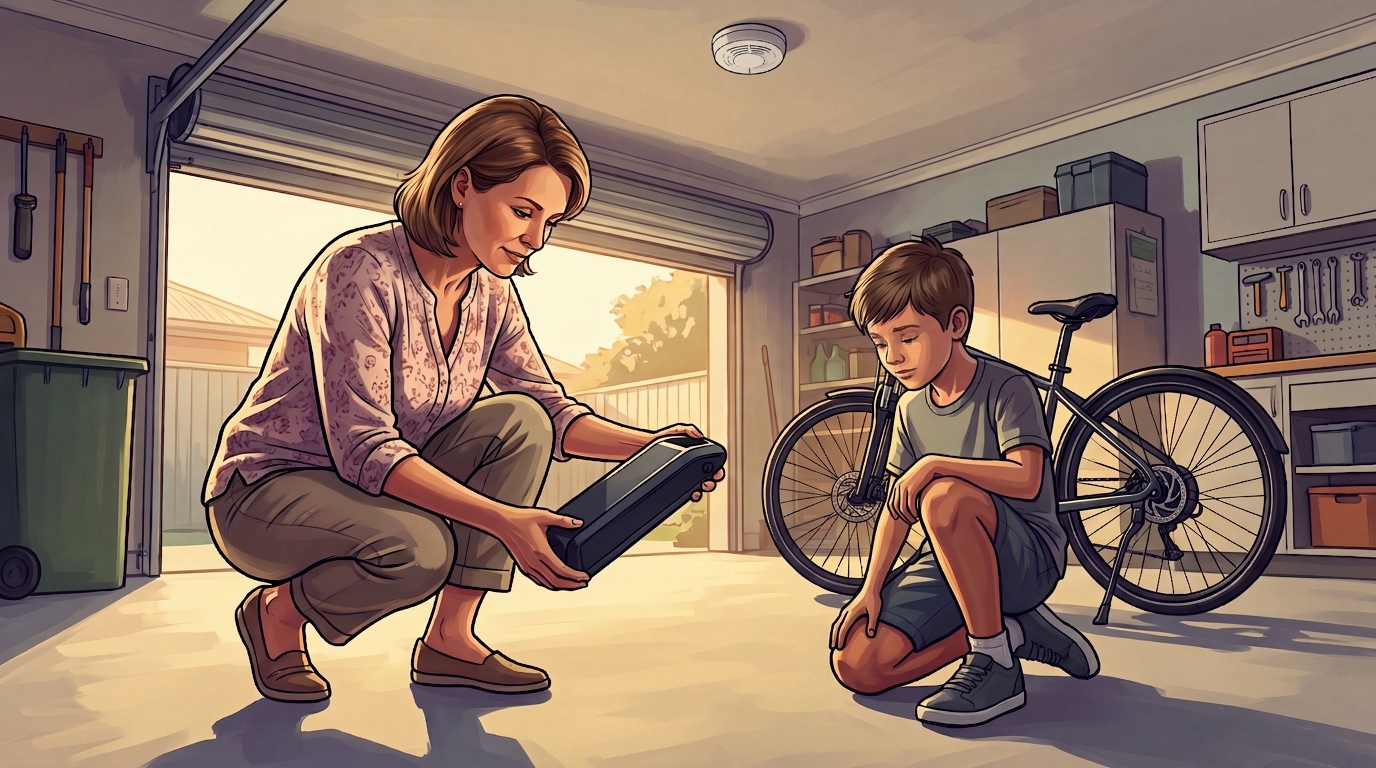
Summer is also a good moment to reset where and when the bike gets charged and stored. For a battery with no signs of damage, FRNSW's advice adds up to this checklist (FRNSW, FRNSW prevention guidance):
a hard surface that can't catch on fire, like concrete floors or tiles, never beds, sofas or carpet
away from bedrooms and living rooms, and away from blankets, clothing, paper and anything else that could catch on fire
away from exits, hallways, stairs and any path you'd use to escape a fire
a working smoke alarm, or a heat alarm where a smoke alarm can't be installed, in the room where it is charged or stored
for larger batteries, a garage, shed or carport away from living spaces, as long as every condition in this list and the charger's own location limits are met there too. Don't use an indoor-only charger outdoors
never charge while you're asleep or away from home, and never leave it charging unattended for long periods. FRNSW says to avoid unattended charging altogether, and follow any stricter manufacturer instructions
disconnect the battery from the charger once it is full
protect it from heat and moisture, including direct sunlight and parked vehicles, and follow the manufacturer's temperature limits and any advice on letting the battery cool after a ride before charging
use the charger the battery manufacturer specifies. FRNSW's safety guidance also refers to compatible, certified third-party charging equipment and checking for the Regulatory Compliance Mark. Follow any stricter battery manufacturer restrictions. That mark, or a plug that fits, doesn't prove a charger is compatible.
When to book a bike shop service
Some jobs belong with a professional. Bicycle Network says a service should include a careful look over the whole bike for cracks in the frame or any safety issues, and should check and fix problems with the brakes, gears, wheels and tyres, headset and crank bearings, suspension if the bike has it, and loose accessories like a rack, kickstand or basket (Bicycle Network).
Bicycle Network suggests asking for a quote first and asking the mechanic to call you before replacing any parts that weren't in the quote (Bicycle Network). For an e-bike, ask for the quote to include any extra diagnostic work and replacement parts.
Tell the shop it's an e-bike when you book. Leave battery repairs, servicing and installation to an experienced e-bike mechanic, as FRNSW recommends, and follow the battery manufacturer's restrictions. Some manufacturers don't allow their batteries to be opened or repaired and require a replacement instead. Never attempt a battery repair at home.
It's also worth asking the shop to check the bike against the current NSW e-bike requirements and to avoid any modification that increases assistance beyond the legal limits. NSW recognises different categories of power-assisted bicycles, and Transport for NSW says that from 1 March 2029 only EN 15194 certified e-bikes will be allowed on NSW roads, and Transport for NSW warns that an e-bike that exceeds the limits is illegal to ride on NSW roads and paths even if its power or speed is restricted by an app or switch, and that hacking or tampering with an e-bike may make it illegal (Transport for NSW). You can also run your bike through the BikeHero e-bike legal checker for your state.
Check the helmet while you're at it
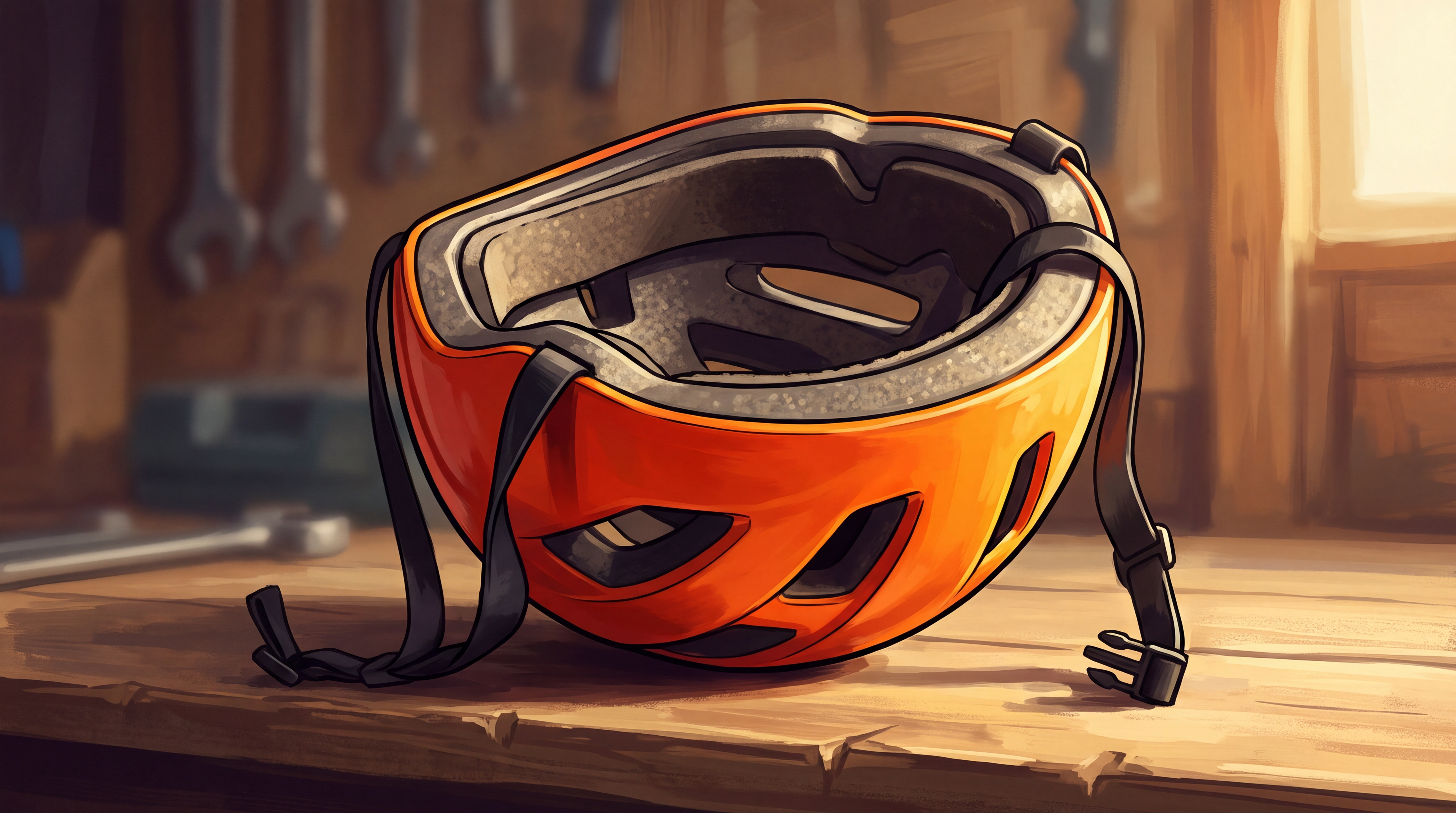
The helmet is part of the bike check too. Transport for NSW says to always replace a helmet if it has been dropped on a hard surface or been in a crash, if you see any cracks in the foam, or if the straps are worn or frayed (Transport for NSW).
Check the helmet's identifying compliance mark against the standards accepted in NSW. Transport for NSW lists them, including AS/NZS 2063:2008, AS/NZS 2063:2020 and specified overseas standards (Transport for NSW).
Then check the fit with your teen wearing it. Follow the helmet manufacturer's fitting instructions, along with the ACCC's helmet fit guidance. It should sit level and snugly with the chin strap securely fastened, and Transport for NSW says the straps should be untwisted and join in a V just below the ears (Transport for NSW). Recheck the fit before riding, including after adjusting the straps.
Frequently asked questions
Can my teen service their own e-bike?
Your teen can learn basic checks with you using Bicycle Network's ABC Quick Check alongside the manufacturer's full pre-ride instructions. Checks are different from servicing or repairing the bike. Leave battery repairs, servicing and installation to an experienced e-bike mechanic, as FRNSW recommends, within the battery manufacturer's restrictions.
Does a bell really matter in NSW?
Yes. Under NSW Road Rule 258, a bicycle ridden on roads and road-related areas must have at least one effective brake and a bell, horn or similar warning device in working order (Transport for NSW). Lights and a rear reflector are also required at night or in hazardous weather conditions causing reduced visibility.
What should we do with an old or damaged e-bike battery?
Never put an e-bike battery in your home waste or recycling bins. In NSW, FRNSW says large removable e-bike batteries can be dropped off at a Community Recycling Centre or Household Chemical CleanOut event. Before travelling, confirm the centre or event accepts the battery and ask for safe packaging and transport instructions. A damaged battery should never go to a battery recycling collection point, and an overheating or off-gassing battery should not be moved or transported. Never charge a damaged battery. If it smokes or burns, don't handle it. Evacuate, close doors if safe, keep everyone out and call Triple Zero (000) from a safe location (FRNSW). Outside NSW, check with your state environment authority or council.
BikeHero is designed to help Australian teens ride smarter and give parents peace of mind. Planned lessons include E-Bike Basics, Essential Gear and Battery Safety. Find out more at bikehero.au.

