E-Bike Theft: Protecting Your Teen's Bike in NSW
E-bike theft in NSW rose 27 per cent in two years. How parents can record, register and lock a teen's e-bike, and what to do if it goes missing.
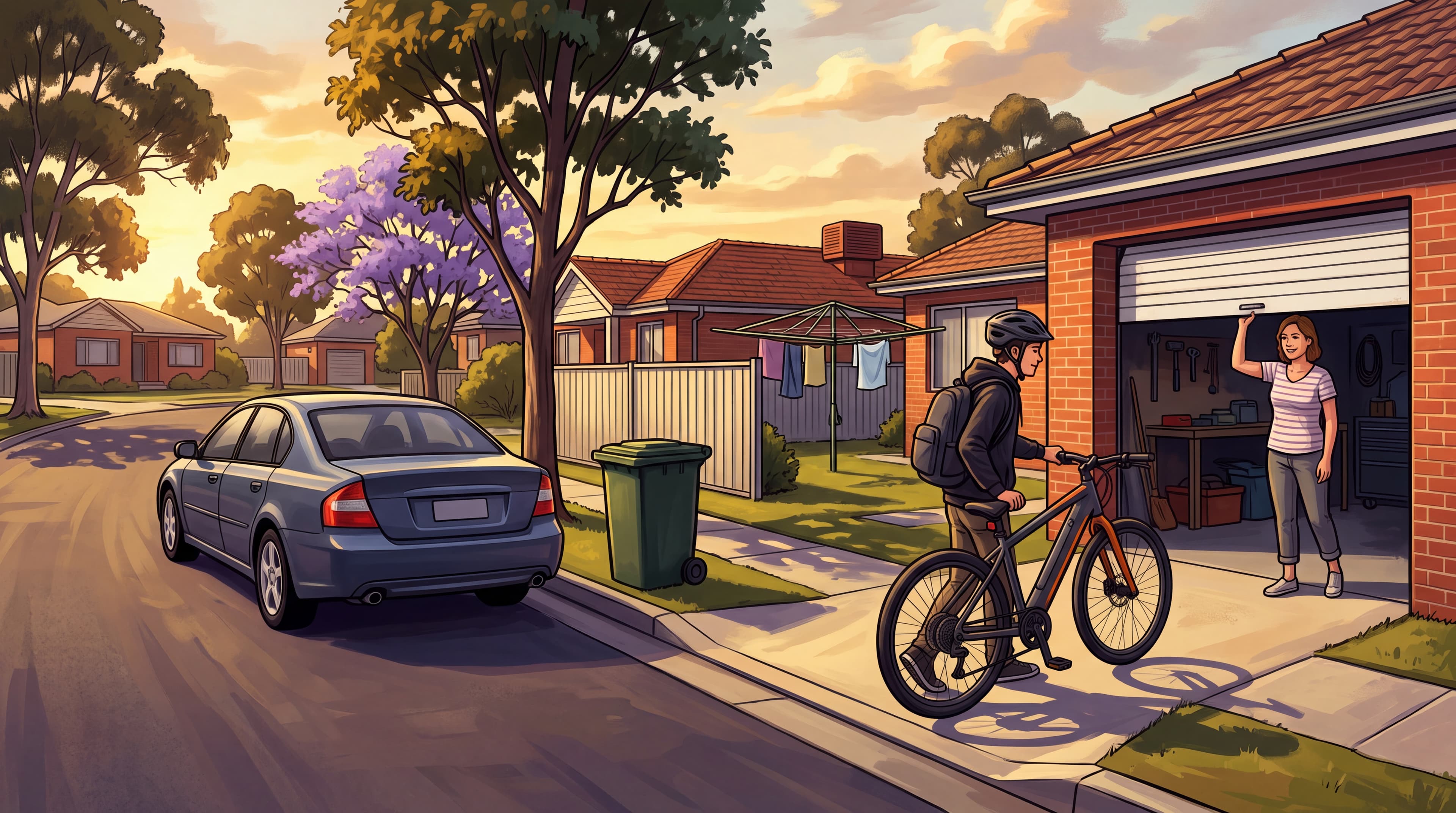
E-bike theft has climbed sharply in NSW. The NSW Bureau of Crime Statistics and Research recorded 2,080 motorised bicycle thefts in the year to March 2026, up 27 per cent over two years (BOCSAR quarterly update, March 2026). The good news for parents is that most of the protection work is quick, and it all happens before anything goes wrong.
How do you stop a teen's e-bike being stolen?
Record the frame serial number and take photos of the bike before your teen rides it anywhere. Register those details with a bike register so police can match a recovered bike back to you. Fit a quality D-lock, secure the frame and a wheel to a solid fixed object, and park where people and cameras can see it.
What the NSW theft figures show
Theft of motorised bicycles in NSW rose by 436 incidents over two years, from 1,644 to 2,080 in the year to March 2026, according to the NSW Bureau of Crime Statistics and Research. That single category accounted for more than one third, 37 per cent, of the total increase in other stealing offences where a stolen item was recorded (BOCSAR).
The rise was not spread evenly. BOCSAR reported the increase in other stealing offences was concentrated in Greater Sydney, up 5.7 per cent, and remained stable in Regional NSW. Within Sydney the sharpest rises were on the Central Coast, up 18.0 per cent, and in the Eastern Suburbs, up 13.6 per cent.
One caveat worth holding onto. BOCSAR publishes counts, not a rate per bike. The figures show the problem getting bigger, but they do not tell you how much riskier any one bike has become.
That is not a reason to keep a teen off a bike. It is a reason to do the boring paperwork before it matters.
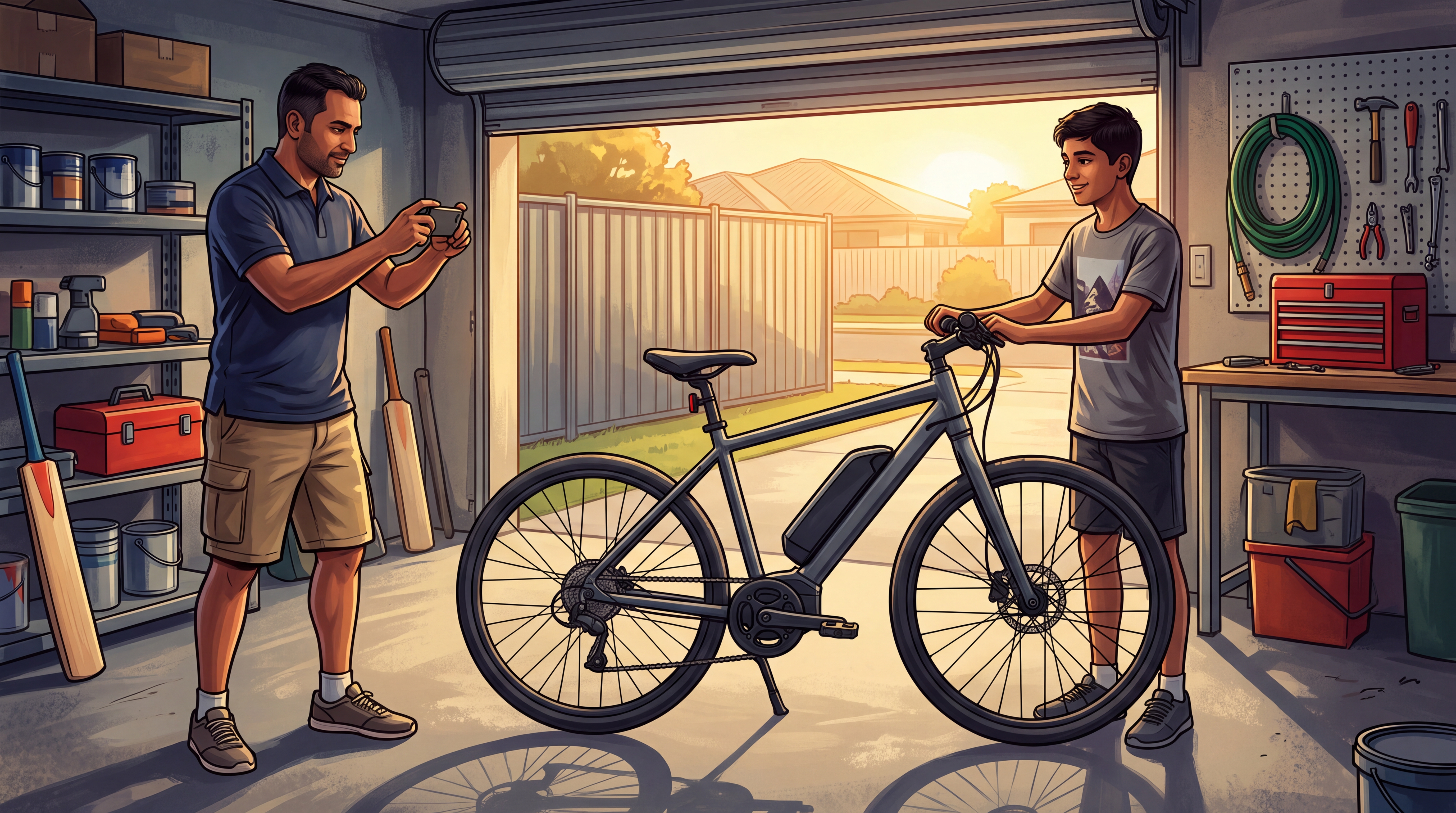
The details that decide whether you get it back
A recovered bike only makes it home if someone can match it back to an owner. The serial number does most of that work, and photos and proof of purchase do the rest.
Find the frame serial number. RACV notes it is usually found under the bottom bracket, the point where the pedal cranks meet the frame (RACV). Photograph the number and save it somewhere you can find in a hurry.
Photograph the whole bike. Bicycle NSW advises keeping photos of the bike and a record of its serial number, along with proof of ownership, before anything happens (Bicycle NSW). Get both sides, and any scratch, sticker or accessory that makes your teen's bike different from the hundreds like it.
Register the bike. Crime Stoppers NSW points bike owners to BikeVAULT and says the service lets stolen bikes be tracked and returned to owners if they are recovered (Crime Stoppers NSW). RACV describes BikeVAULT as an Australian bike registry where you log the frame serial number, a description of unique features and accessories, and photos.
Keep the receipt with the photos. If you ever need to make an insurance claim, or show police that the bike is yours, you will want everything in one place rather than in a drawer somewhere.
Do all four with your teen rather than for them. It gives them a share in looking after something expensive.
How to lock an e-bike so it stays put
RACV recommends a high quality D-lock, also called a U-lock, on the basis that it is extremely difficult to cut with bolt cutters. They caution against relying on a cheap cable lock, which is light and easy to use but far easier to cut (RACV).
The technique matters as much as the lock. RACV advises locking the frame and at least one wheel to an immovable object, and warns that locking only the front wheel lets a thief take the rest of the bike. They also say to choose a solid fixed object that cannot be easily cut or removed, and not to rely on signposts or wooden railings. A coiled wire lock is useful for securing the wheels to the frame.
Worth teaching your teen to look at what they are locking to, not just at the lock. A smooth post with an open top is not an anchor. A bike can be lifted and the whole loop slid up and over it. A proper bike rail that is bolted to the ground at both ends gives the lock something it cannot be lifted off.
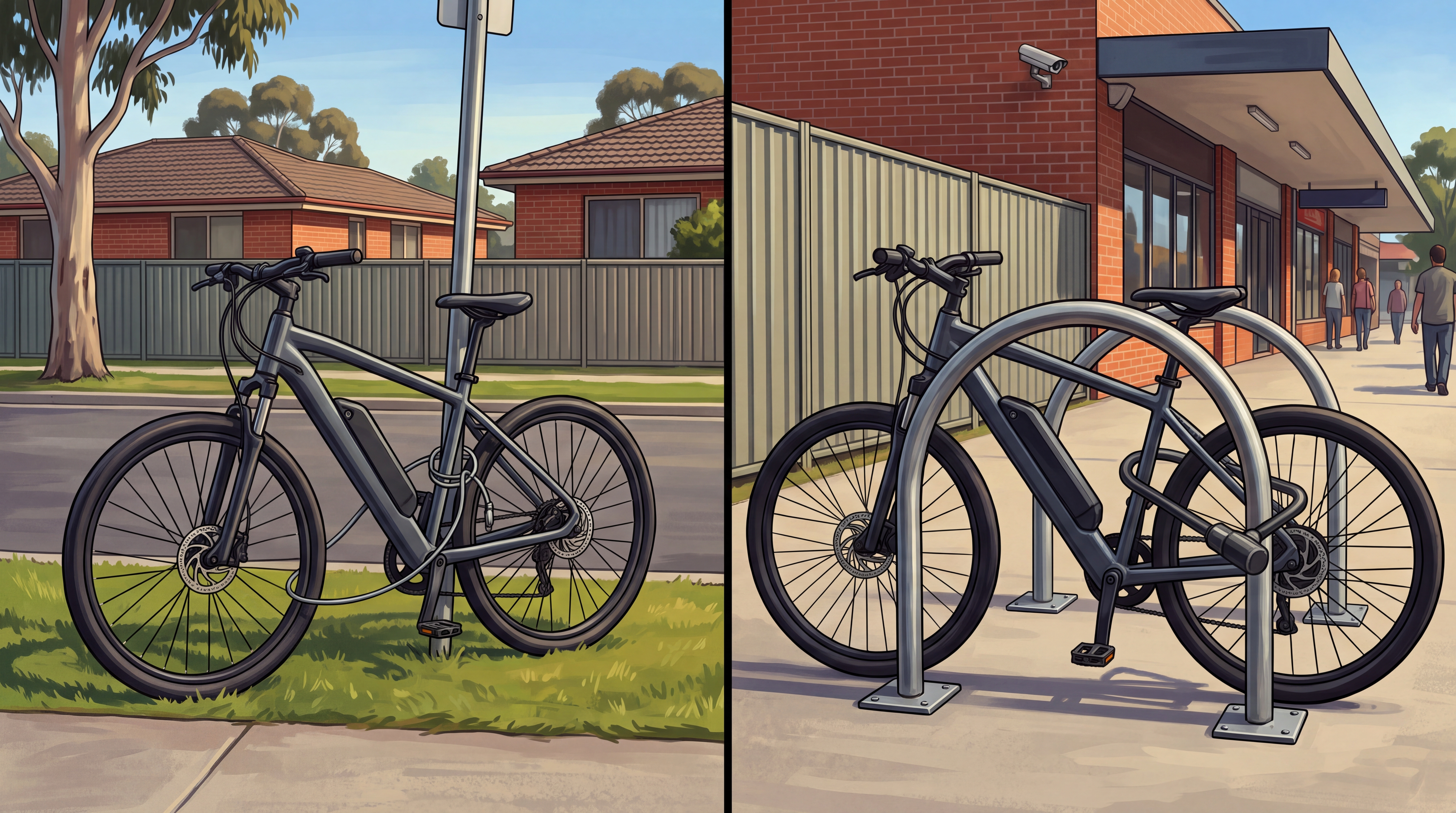
Where the bike sits is the other half of it. RACV suggests parking somewhere with high visibility so the bike is easily seen by passers by, with CCTV coverage, in a well lit spot at night, and at a designated bike rack rather than whatever pole is closest.
For a teen, that comes down to three habits worth practising until they stop being decisions. Lock the frame and rear wheel. Lock to something bolted down at both ends. Take the lights and the bike computer with you.
What to do in the first hour if it is gone
Bicycle NSW sets out the order clearly. Report it to police the moment you realise the bike is missing, and give the serial number, make, model and unique features, along with photos if you have them (Bicycle NSW).
Call Triple Zero (000) if the theft is happening now, if someone is seriously injured or needs urgent medical help, or if life or property is being threatened. For a theft you discover afterwards, you may be able to report online. Service NSW says you can create an online theft or stealing report using the NSW Police Force Community Portal, and that you will need your personal details, details of the theft, the location, date and time of the incident, and a description of the stolen property. Online reporting is only for eligible incidents, so the portal asks you a set of eligibility questions first, and some reports have to go to police another way. For non-urgent police assistance the number is 131 444 (Service NSW).
After the report, Bicycle NSW suggests posting the details and photos in local Facebook groups, cycling forums, and on platforms like Gumtree, eBay and Facebook Marketplace, registering the bike with BikeVAULT, and checking local pawn shops, second hand stores and markets (Bicycle NSW). Do that part yourself rather than leaving it to your teen, keep your family's personal details and address out of any public post, and if you spot what looks like the bike for sale, screenshot the listing and give it to police. Do not arrange to meet the seller and do not try to take the bike back.
On insurance, RACV suggests considering portable items cover, which helps protect valuables your family takes outside the home, such as bicycles. Policies differ, so read your own product disclosure statement rather than assuming a bike is covered.
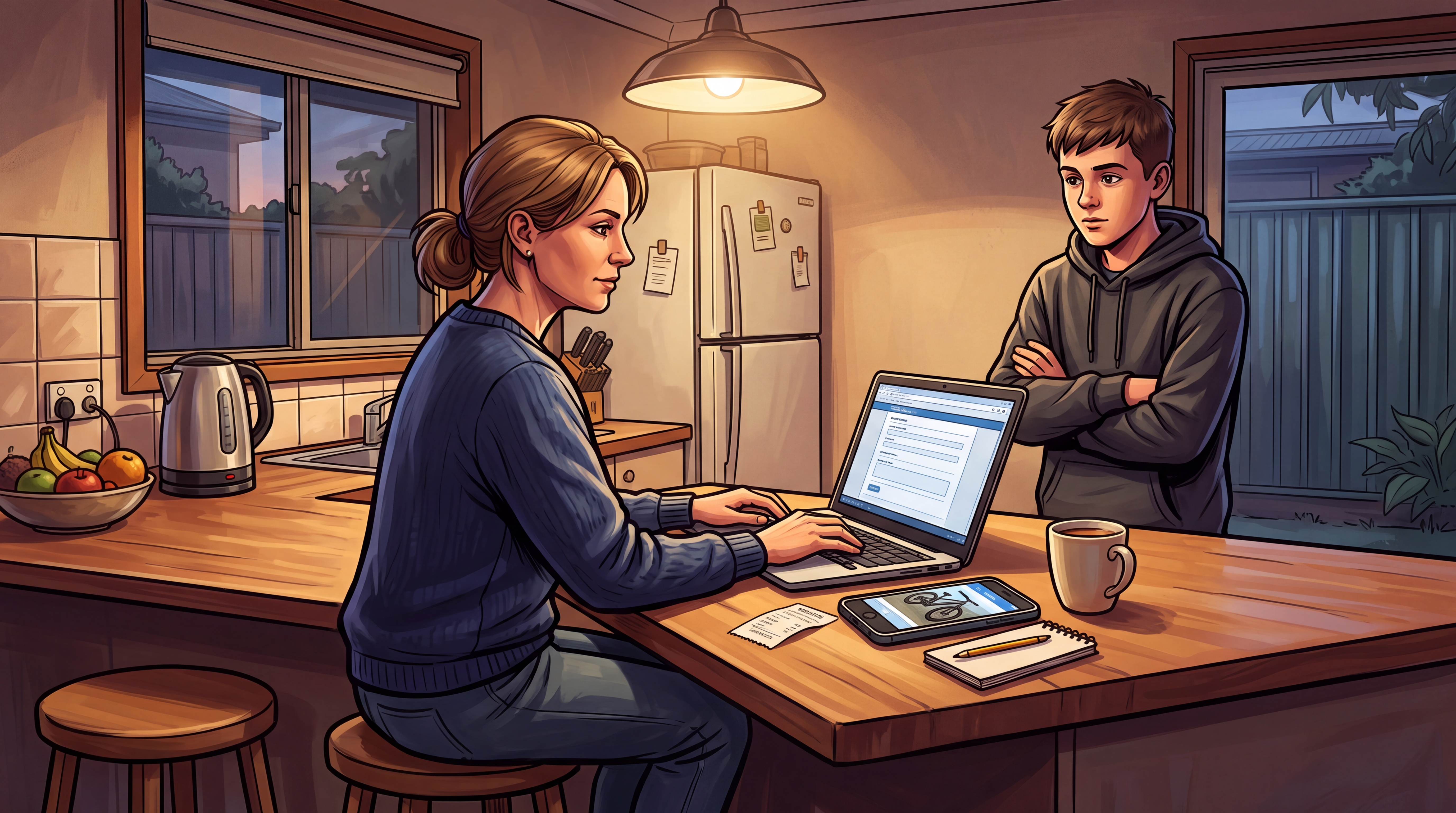
Frequently asked questions
Does registering an e-bike stop it being stolen? No. Registering does not prevent a theft. What it does is give police a way to match a recovered bike back to your family. Crime Stoppers NSW also suggests checking a register online before you buy a used bike (Crime Stoppers NSW). Ask the seller for proof of ownership as well, because a bike not appearing on a register is not proof that it is legitimate.
Is one good lock enough, or does my teen need two? Start with one suitable primary lock and use it properly, through the frame and at least one wheel, secured to something solid and fixed. A second lock adds another barrier for a thief to get through. How secure the bike actually is depends on the locks, what they are attached to, and how they are used, so technique matters more than the number of locks.
Are these theft figures the same across Australia? No. The numbers here are NSW figures published by the NSW Bureau of Crime Statistics and Research. Other states and territories publish their own crime data separately. The prevention advice from RACV and Bicycle NSW applies wherever your teen rides.
Riding with a bit more peace of mind
An e-bike is an expensive thing to hand a teenager, and looking after it is a skill like any other. Record the number, register the bike and practise locking it properly. It lowers the odds of losing it, and it gives you something to work with if it goes.
BikeHero is designed to help Australian teens ride smarter and give parents peace of mind. Planned lessons include E-Bike Basics, Essential Gear and Where to Ride. Join the beta waitlist today at bikehero.au.


