E-Bike Hand Signals Every Aussie Teen Should Know
E-bike hand signals tell drivers what you are about to do. Learn the right-turn signal, head checks and bell rules that keep Aussie teens safe.
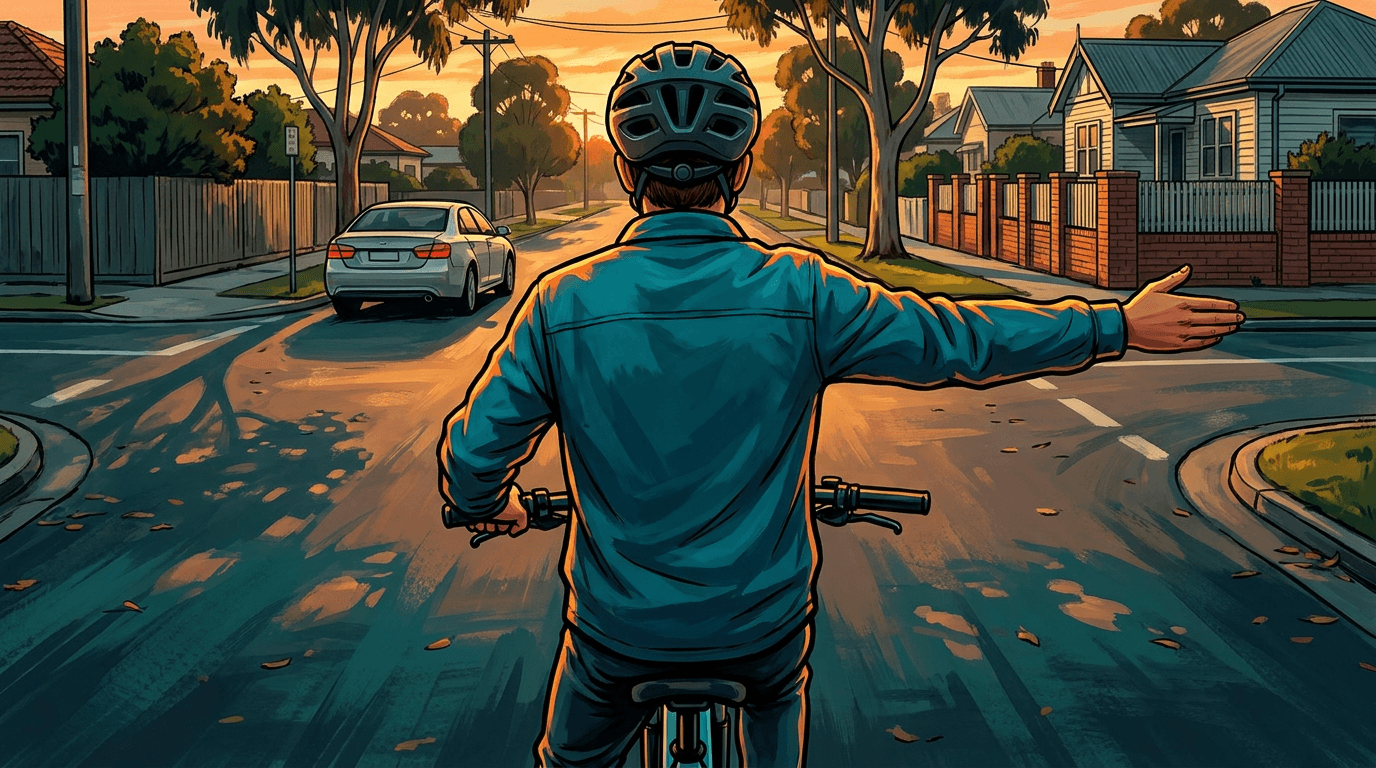
E-bike hand signals are one clear way to tell a driver what you are about to do, and on an e-bike that matters more than most riders realise. You reach the corner quicker than you would on a regular bike, so drivers have less time to guess. A clear signal gives drivers a better chance to understand what you are about to do. Here is what the road rules commonly ask of riders, with state differences called out, plus the head checks and bell habits that keep you upright and out of trouble.
What hand signals do you need on an e-bike in Australia?
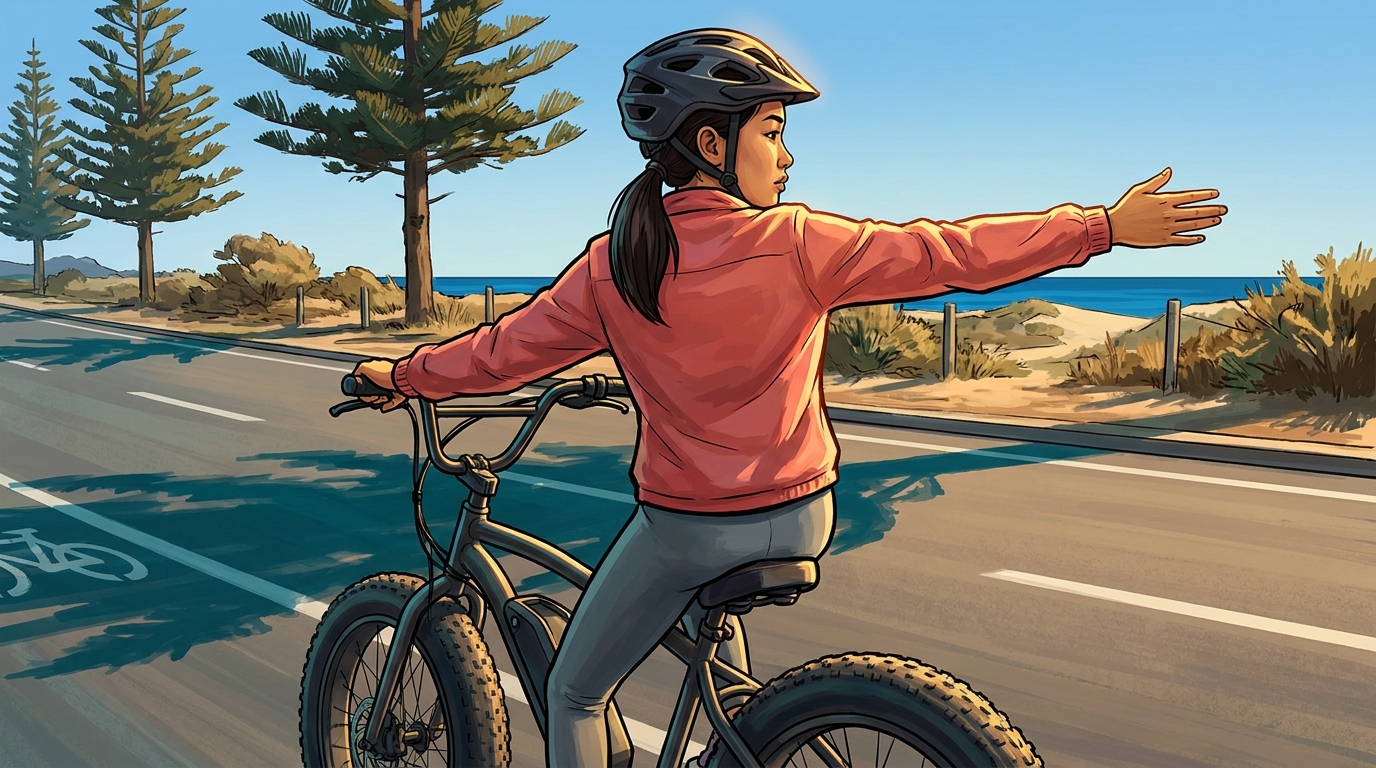
In NSW, Queensland and Victoria, official rider guidance says you must hand-signal before turning right: extend your right arm straight out, level with your shoulder, palm facing forward. Transport for NSW recommends doing this for about 30 metres before the turn. Left turn and stop signals are not required in those states, but using them makes you far easier to read, and easier to read means safer. Some states ask for more, including Western Australia, so check your local road rules before you ride (Transport for NSW, road rules for bicycle riders).
In NSW, Queensland and Victoria, the right-arm signal is the one hand signal the official rider guidance clearly requires. Other states can ask for more. Everything else in this guide is the skill that makes it actually work.
Why signals matter even more on an e-bike
For many legal pedal-assist e-bikes, motor assistance cuts out at 25 km/h. The exact legal category can vary by state, so check that your e-bike is road-legal where you ride. The BikeHero e-bike legal checker can help with that. Either way, it means you can arrive at an intersection sooner than a driver expects a bike to. A driver glances up the road, clocks a rider, and quietly assumes they have time. On an e-bike, they often do not.
Many e-bikes are also heavier than a regular pushbike, so they carry more momentum into a turn. Add those two things together and you get a rider who may arrive sooner and need more room to slow than a driver expects. A signal closes that gap. It tells the driver "I am turning here" before they have to work it out for themselves.
How to give the right-turn signal without losing your line
The signal is easy. Doing it without wobbling is the skill. Here is the order that keeps you steady.
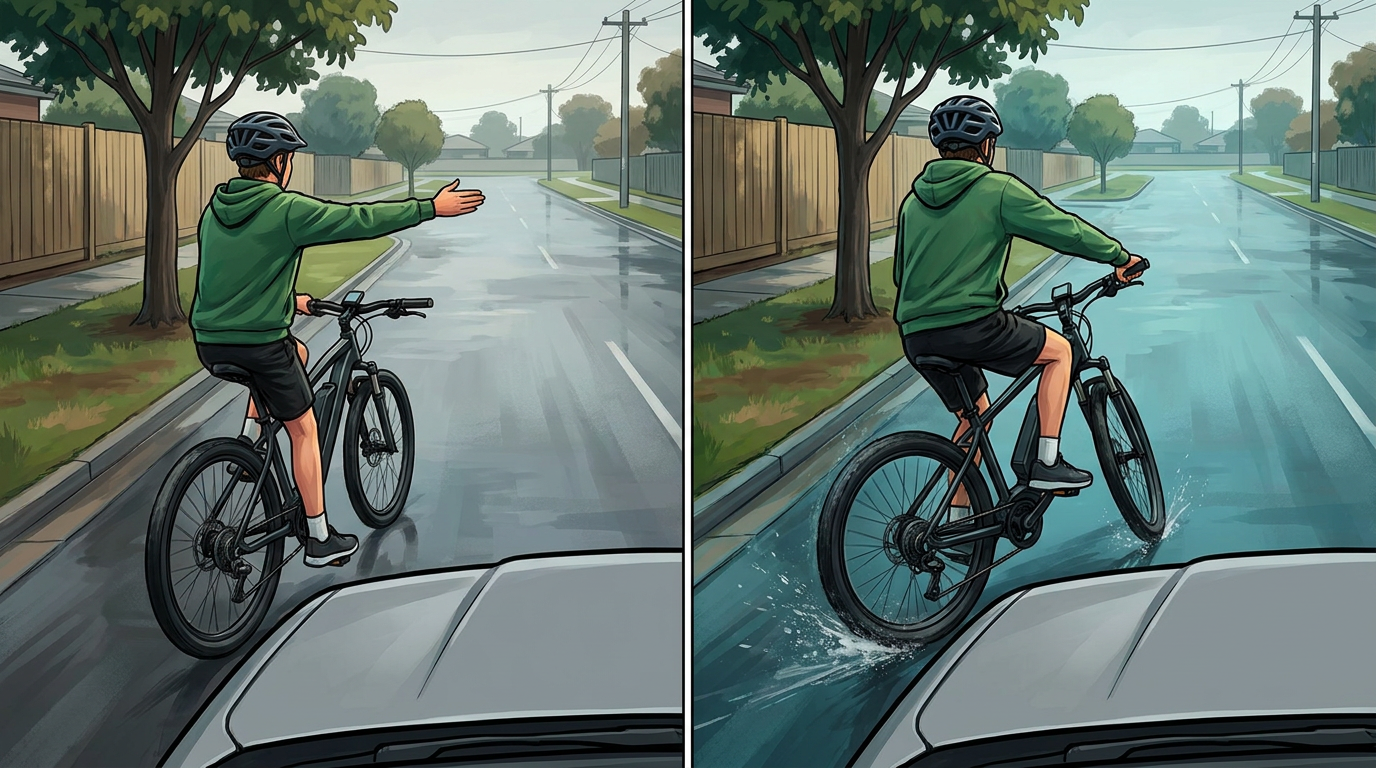
Before your arm goes out, do a head check over the shoulder you are moving towards, usually your right shoulder from the kerb. Look first, then signal, then move, then settle back to the left once you are through the turn. Look, signal, move, return left. Burn that order in until it is automatic.
Keep your other hand firm on the bar with a finger covering the brake, and practise on a quiet street before you try it in traffic. Treat it like a streak. The more days you do it without thinking, the more it becomes the thing your body just does. That is when you have levelled up.
Your bell, your brakes, your bit of the path
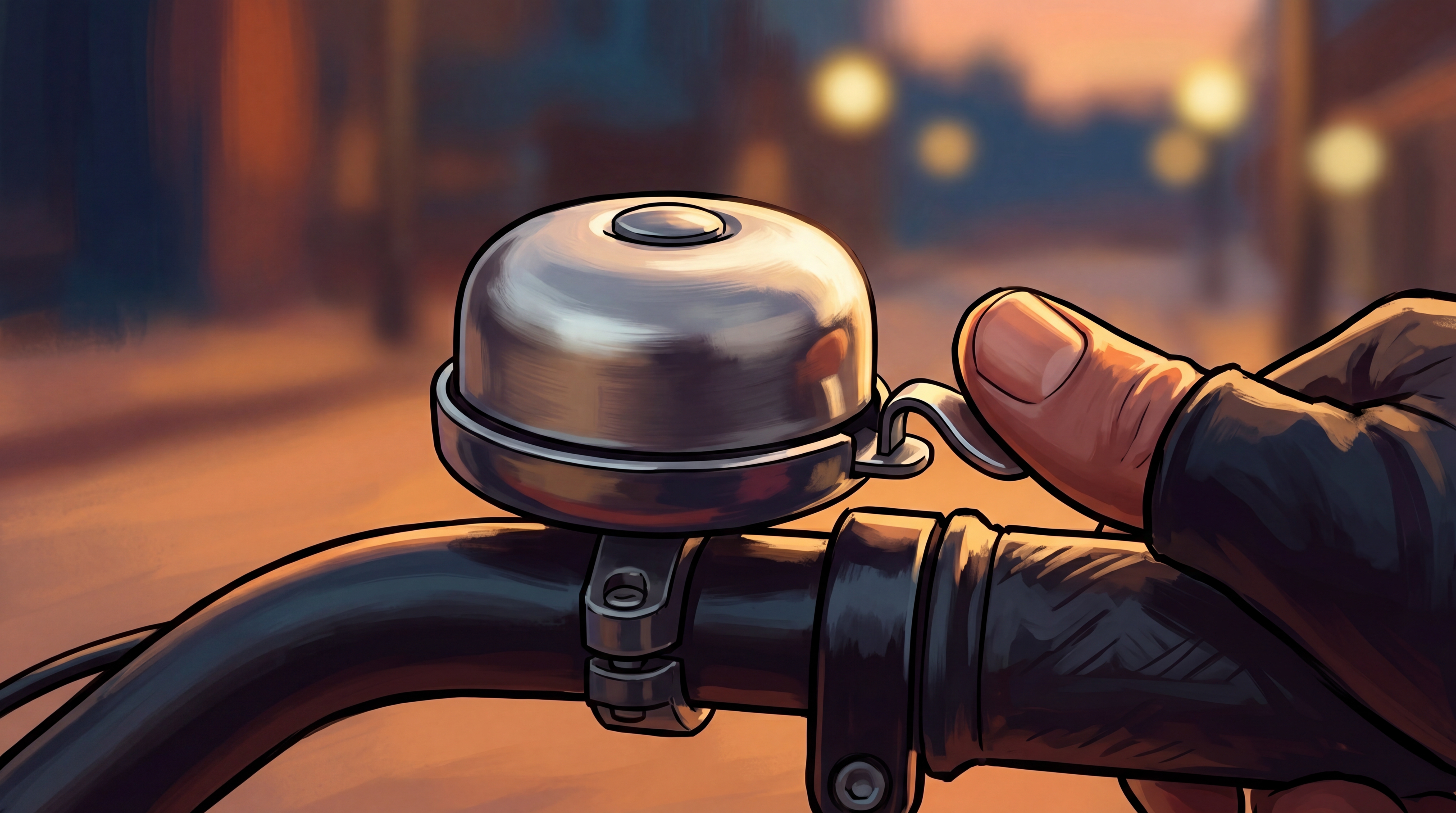
Your bike has to be ready before you even signal. In NSW, Road Rule 258 says a bicycle must have at least one effective brake and a bell, horn or similar warning device in working order. Other states also require working safety equipment, but the rule number and wording can differ. In NSW, riding without a working brake or warning device is an on-the-spot fineable offence, and fines vary by state, so check your local rules (Transport for NSW, road rules for bicycle riders).
The bell is not there to be annoying. On a shared path you have to give way to people on foot, keep left, and a quick ring or a friendly "passing on your right" gives them a heads-up before you reach them. A walker who hears you coming is less likely to be surprised by you.
Be predictable so drivers have a better chance to see you
Signals are only half the job. The other half is being the kind of rider drivers can read without trying.
Hold your line. Do not weave in and out between parked cars, because every time you disappear and reappear you reset the driver's guess. Make eye contact at intersections, and if you cannot see a driver's eyes, assume they cannot see you. At night or in weather that reduces visibility, NSW rules require a white front light visible for at least 200 metres, a red rear light visible for at least 200 metres, and a red rear reflector visible for at least 50 metres. Run all three so you are a rider and not a shadow.
Predictable riding helps lower the chance of a close call. That is the difference between an L-plater and a hero on the road.
Frequently asked questions
Do I legally have to signal a left turn on an e-bike?
In NSW, Queensland and Victoria, the rider guidance only requires a hand signal for a right turn. Signalling left is not mandatory in those states, but it is a smart habit because it removes any doubt about where you are headed. Some states, including Western Australia, ask for more, so check your local rules.
Which shoulder do I check before I turn?
Check over the shoulder on the side you are moving towards. Turning right from the kerb usually means a head check over your right shoulder, then signal, then move. Always look before you commit to the turn.
Can I really get fined for not having a bell?
Yes. In NSW, riding without a working bell, horn or similar warning device, or without at least one effective brake, is a fineable offence (Transport for NSW, Road Rule 258). Fines vary by state, so it is worth knowing your own.
BikeHero turns all of this into something you can actually practise. The course covers hand signals, head checks and reading traffic so you can move without second-guessing it.
Take a look at the BikeHero beta at bikehero.au and start levelling up your road skills.


