The Right E-Bike Helmet for Your Teen: A Parent's Guide
How to choose an approved e-bike helmet for your teen, fit it right, and know when to replace it. A practical parent's guide.
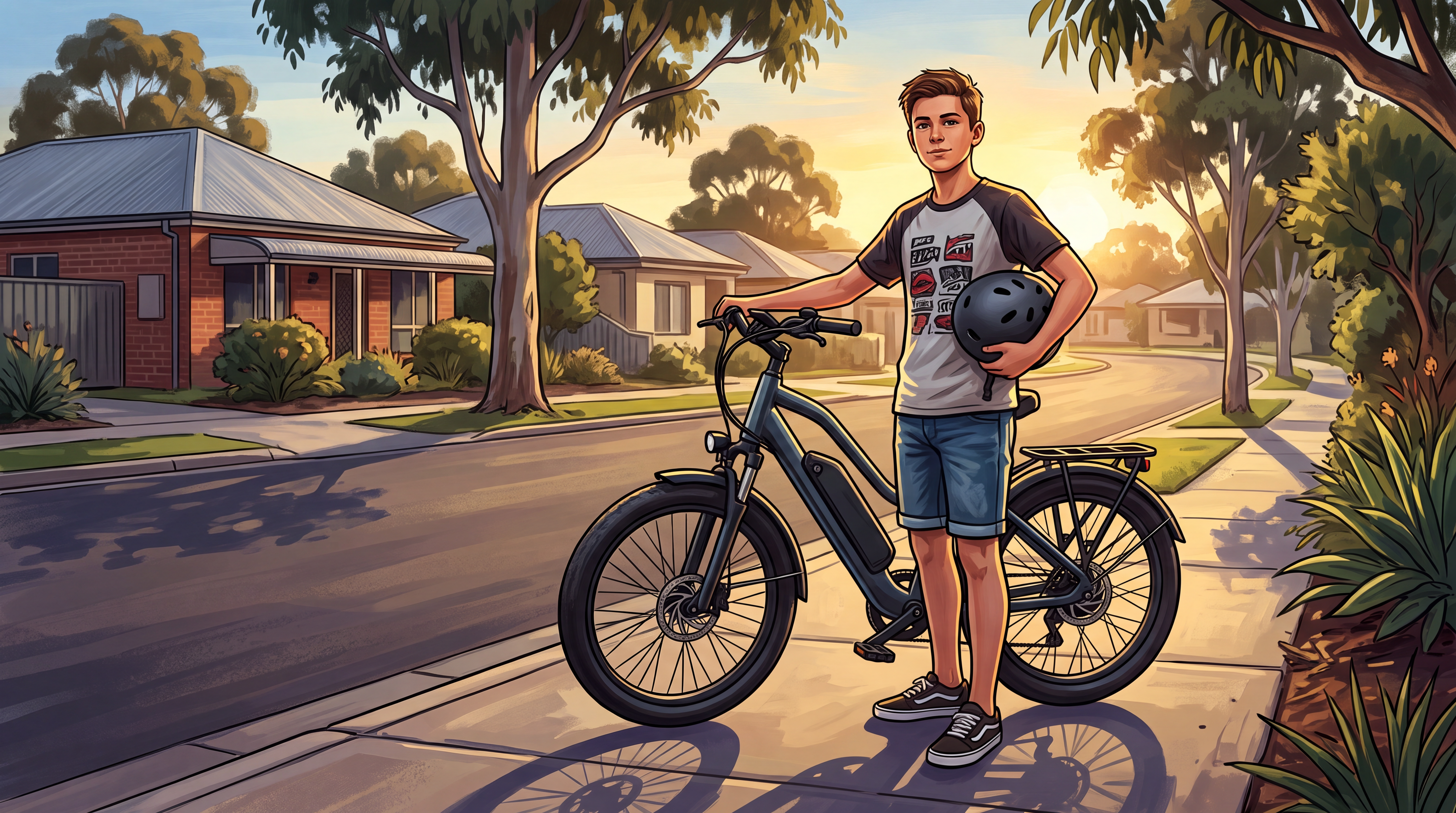
Choosing a helmet for your teen's e-bike riding is one of the simplest safety decisions you will make, and one of the easiest to get slightly wrong. A helmet that sits too far back, has loose straps, or was never approved for bicycle use may not give the protection you expect. Here is how to choose one that is approved, fit it properly, and know when it needs replacing.
Does my teen need a special e-bike helmet?
There is no separate legal category for an "e-bike helmet". What your teen needs is a bicycle helmet approved for use where you live, so you are choosing from the same shelf as any other bike helmet. Helmet laws are set by each state and territory, not by one national rule. In NSW, a power-assisted cycle that meets the definition of a bicycle is covered by the same road rules, and the rider must wear an approved bicycle helmet, securely fitted and fastened, with only limited exemptions. Most passengers are covered too. If you ride outside NSW, check your state or territory's rules, because exemptions and approved standards can differ.
Why helmet fit matters
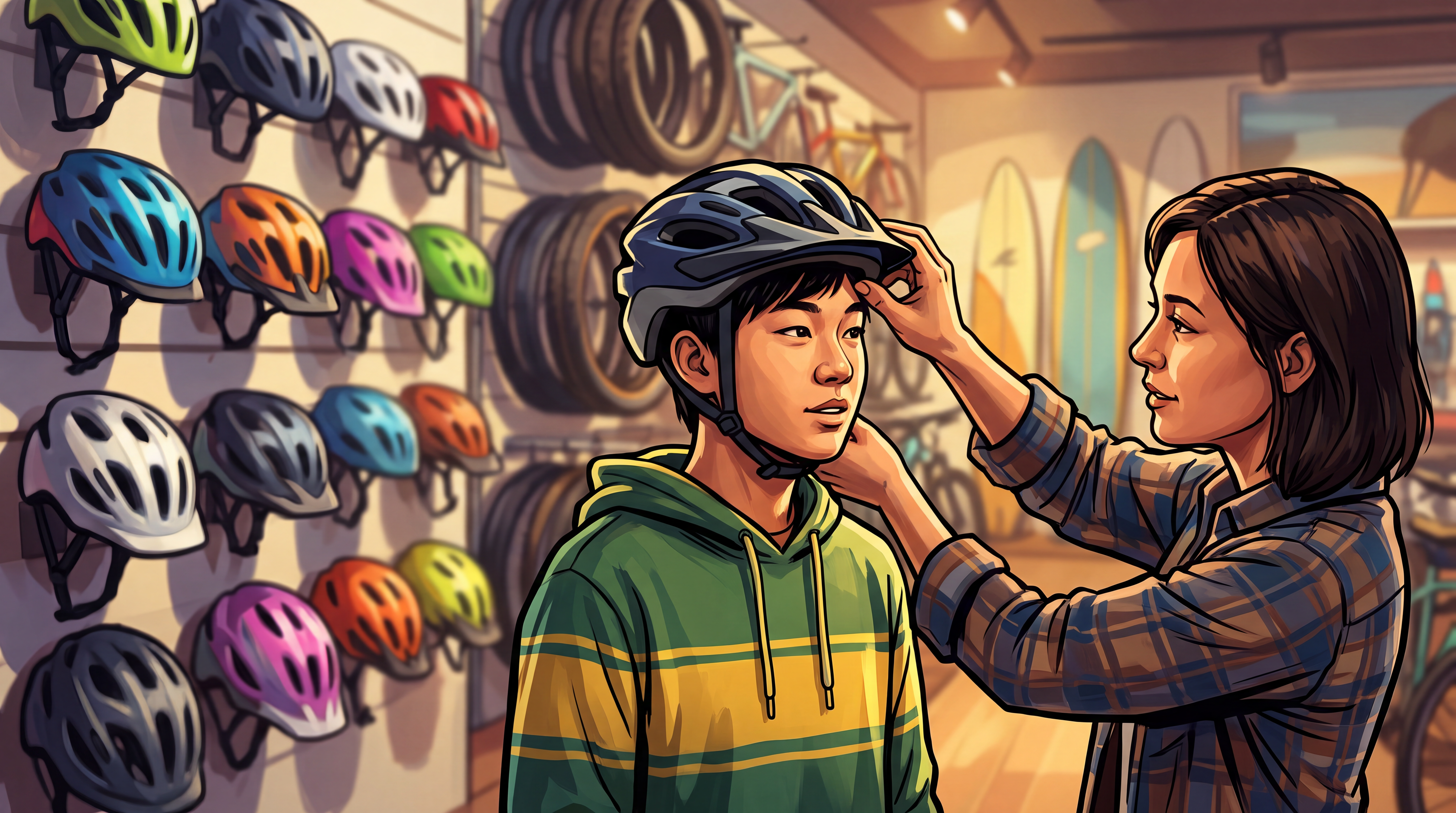
Correct fit matters on every bike. For most electrically power-assisted cycles, the motor assists your teen up to 25 km/h and then cuts out, though a rider can still go faster by pedalling or heading downhill. At those speeds, a helmet that is loose or sitting in the wrong place can shift on impact or come off when it is needed most. That is why getting the fit right is worth ten minutes of your time. E-bike categories and rules vary between states, so check what applies where you live.
What makes a helmet "approved"?
To be sold as a bicycle helmet in Australia, a helmet must comply with the national mandatory safety standard. Under that standard, a helmet can meet any one of six recognised standards:
AS/NZS 2063:2020, the current Australian and New Zealand standard
AS/NZS 2063:2008, the earlier version
EN 1078:2012+A1:2012, the European standard
US CPSC 16 C.F.R. Part 1203
ASTM F1447-18, an American standard
Snell B-95
Those are the federal rules for what can be supplied. Which helmets may legally be worn on the road is decided separately by each state and territory, so the safest approach is to buy a helmet approved for use where you live. All six standards remain valid pathways under the 2024 mandatory standard, whose transition period ended after 21 September 2025.
When shopping, check that the seller confirms the helmet meets the mandatory standard, look for the required identifying mark once it arrives, and search the Product Safety recall list. If a seller cannot show compliance information, ask before you buy.
How to fit your teen's helmet properly
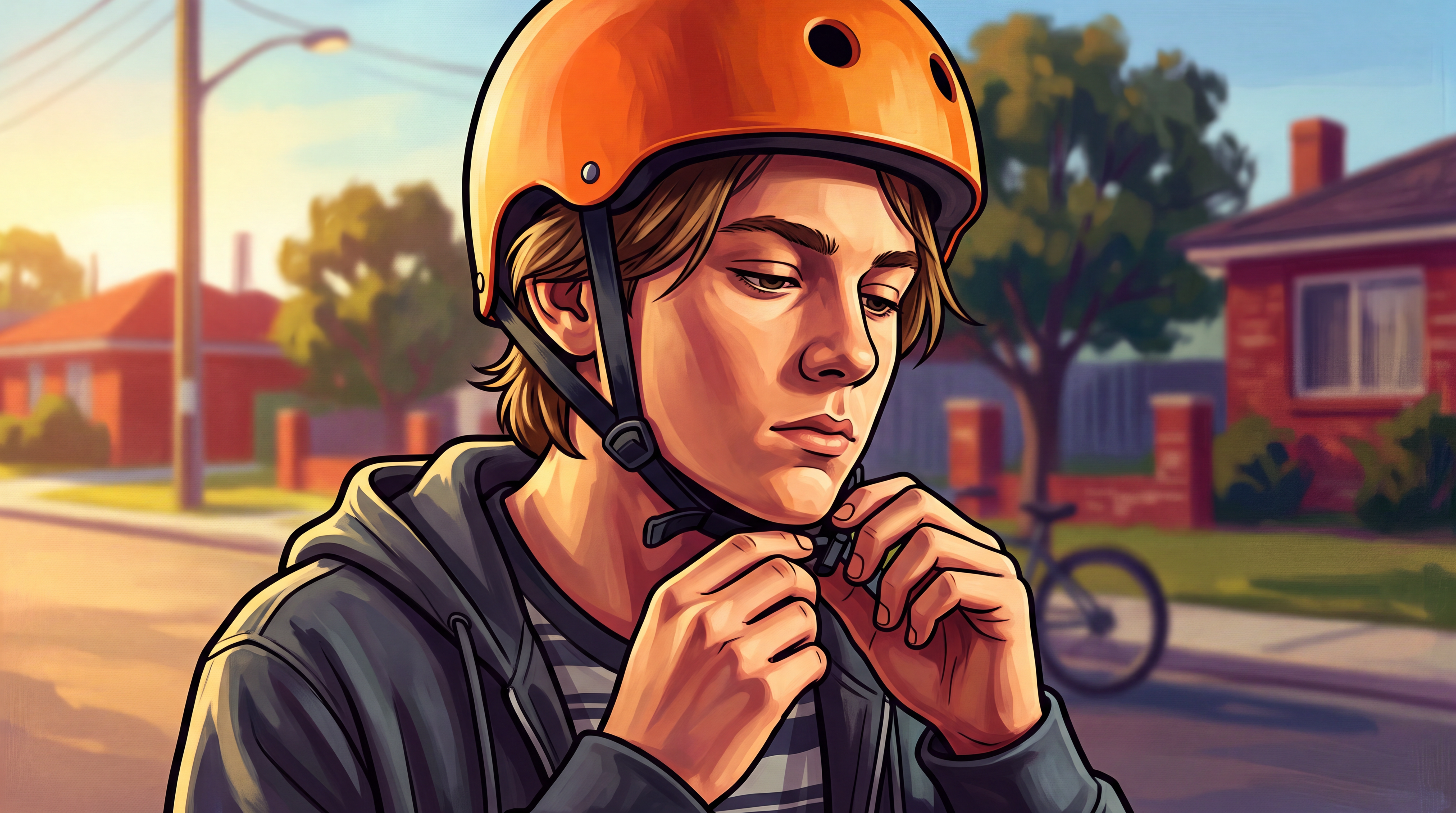
An approved helmet works best when it is correctly fitted and securely fastened. Follow the maker's fitting instructions first. NSW road safety guidance also offers a simple check that is easy to teach:
Eyes: the front of the helmet sits level, about two finger-widths above the eyebrows, not tilted back.
Ears: the side straps form a "V" that meets just below each ear.
Mouth: with the strap fastened, you should be able to fit one finger between the buckle and the chin. Snug, not pinching.
Then test it gently. With the strap done up, grip the helmet and move it front to back and side to side. It should not slide forward over the eyes or back off the forehead. Adjust the straps and any fit system to the maker's instructions. If the helmet has a rear dial, set it together the first time so your teen knows how to adjust it.
When should you replace a teen's helmet?
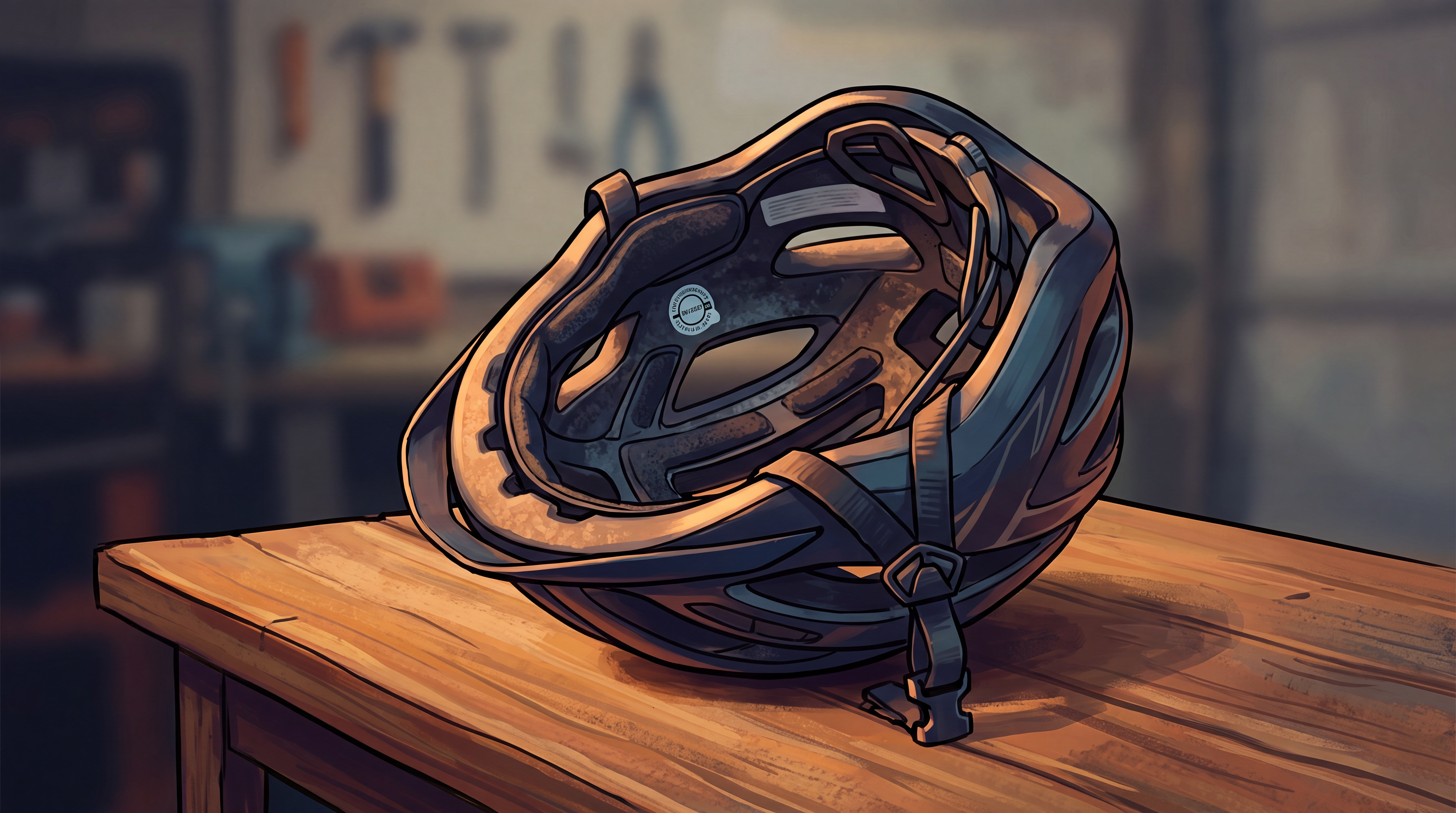
A helmet has a limited service life, and a crash or heavy blow can cause damage you cannot see. Replace your teen's helmet:
After a crash or hard knock, even if there is no visible damage. The shell or liner may be compromised in ways you cannot spot.
If it is cracked, the liner is dented, or the straps or buckle are damaged.
If it no longer fits. Teens grow, and a helmet that sits high or pinches may no longer fit correctly and should be reassessed.
Replacement intervals vary by brand. Bell, for example, recommends replacing a helmet three to five years after purchase, and Trek suggests three years for its Solstice helmet. Follow the instructions for your teen's specific helmet, and replace it sooner after any crash or damage.
Frequently asked questions
Is a skate or scooter helmet okay for an e-bike? Use one for bike riding only if the maker supplies it for bicycle use, it carries the required mark for a standard accepted where you live, it fits correctly, and it is in good condition. A helmet made only for skateboarding or scootering should not be relied on for riding a bike.
Does a more expensive helmet protect better? Price alone does not tell you how well a helmet protects. Every approved helmet must meet the minimum requirements of its standard, and Transport for NSW runs a separate Helmet STAR program that compares how well helmets protect in a crash. Choose a helmet that is approved for use where you live, fits correctly, and is comfortable enough that your teen will actually wear it.
My teen says the helmet is uncomfortable. What can I do? Comfort helps your teen wear the helmet every ride. Adjust the straps and any fit system, try a different size or shape if needed, and let your teen have a say in the colour or style.
BikeHero helps Australian teens ride smarter and parents worry less. Lessons cover helmet fit and pre-ride checks, road positioning, and spotting hazards early. Find out more at bikehero.au.


