Bike Lane Rules in NSW: An E-Bike Teen's Guide
Bike lane rules in NSW, explained for teen e-bike riders: when you must use the lane, when you can leave it, and who else is allowed in. Find out more.
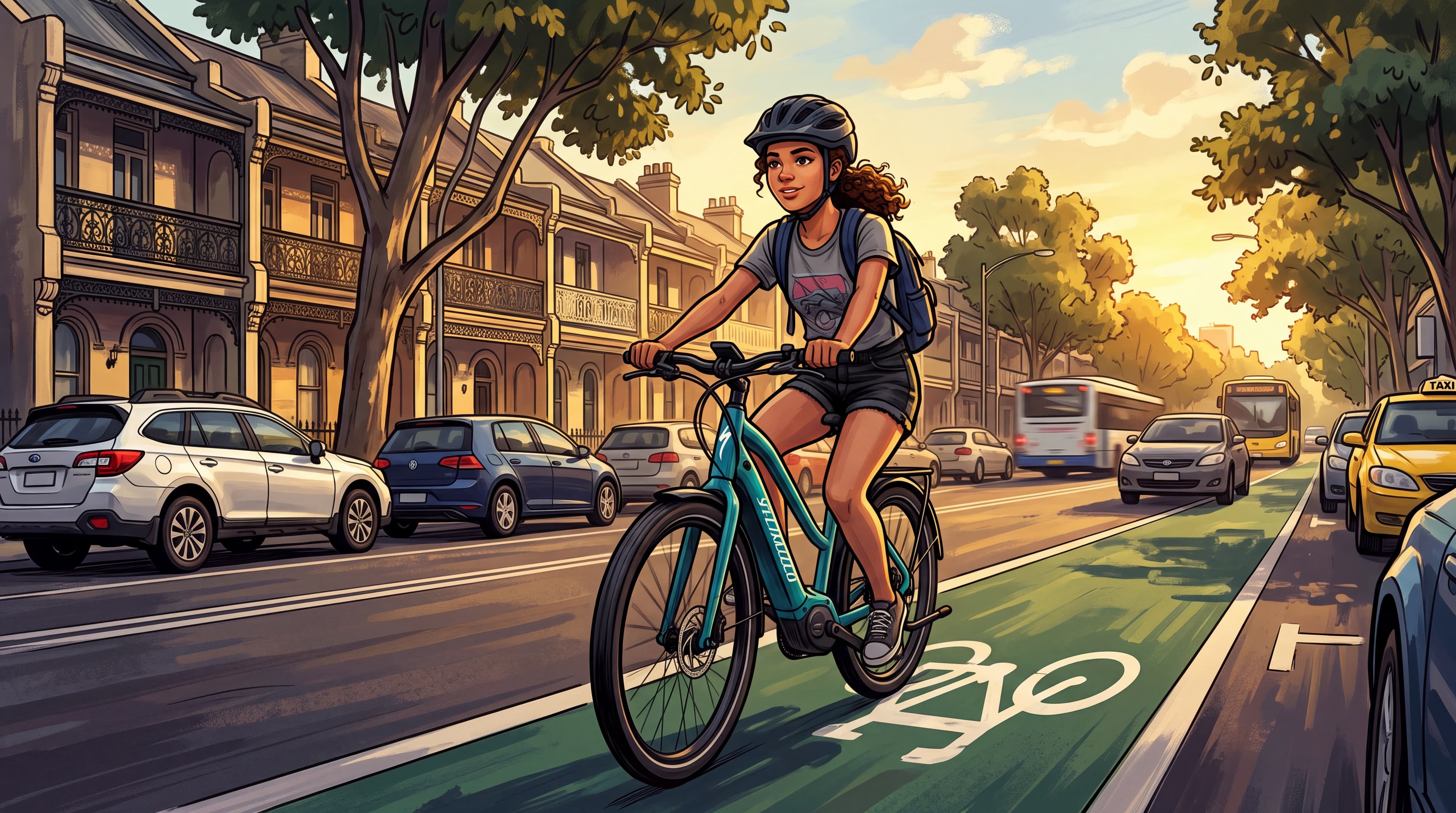
Bike lane rules in NSW come with a twist: a marked bicycle lane isn't only yours. Other vehicles can legally enter it in specific situations, a bicycle lane can legally end at an intersection, and when one runs your way, you usually have to use it. Here are the key lane rules for NSW teens riding road-legal e-bikes.
Quick answer: do I have to ride in the bike lane in NSW? Usually, yes. If you're riding on a road that has a bicycle lane for riders going your direction, NSW Road Rule 247 says you must ride in it unless it is impracticable to do so. The rule doesn't cover road related areas such as the shoulder. Whether it's impracticable depends on the situation in front of you, like a blockage or hazard in the lane.
Level 1: What counts as a bike lane
These rules are for bicycles, and in NSW that includes a road-legal e-bike. NSW Road Rule 15-1 (NSW Road Rules 2014) sets out which power-assisted bikes count as a bicycle. Not every e-bike sold meets it, so check yours against NSW Government's guide to choosing a legal e-bike.
Not every strip of paint is a bike lane either. Under NSW Road Rule 153 (NSW Road Rules 2014), a bicycle lane is a marked lane, or part of one, that begins at a bicycle lane sign applying to it, or at a road marking with both a white bicycle symbol and the word "lane" painted in white.
It ends at the nearest of these:
an end bicycle lane sign applying to the lane, or a road marking with both a white bicycle symbol and the words "lane end" painted in white
an intersection, unless the lane is on the unbroken side of the continuing road at a T-intersection, or is continued across the intersection by broken lines
the end of the road, if it's a dead end.
That second one matters. Where the bicycle lane ends at an intersection, check the road layout and watch for turning vehicles. Treat intersections like checkpoints: scan ahead, adjust your speed and plan your line.
A coloured strip or a bike symbol on its own doesn't make a bicycle lane. Look for the start sign, or the bike symbol together with the word "lane", including further back along the road.
Level 2: When you must use the lane, and when you can leave it
Rule 247 (NSW Road Rules 2014) says that if you are riding on a length of road with a bicycle lane for riders travelling in your direction, you must ride in it unless it is impracticable. NSW Government's rules for riding bikes in traffic puts it the same way: use the bike lane if available, unless it's impractical.
If there's no bicycle lane, keep a safe position towards the left, with clearance from parked cars, grates and debris. You may need more space within the traffic lane to avoid hazards. See NSW Government's riding in traffic guidance.
"Impracticable" isn't a loophole to ride wherever you like. It depends on the circumstances. A car, bin or roadworks blocking the lane, or broken glass, potholes or debris, may make it impracticable. For a right turn, plan ahead and check the road layout and the turning rules that apply. NSW Government explains right turns and hook turns.
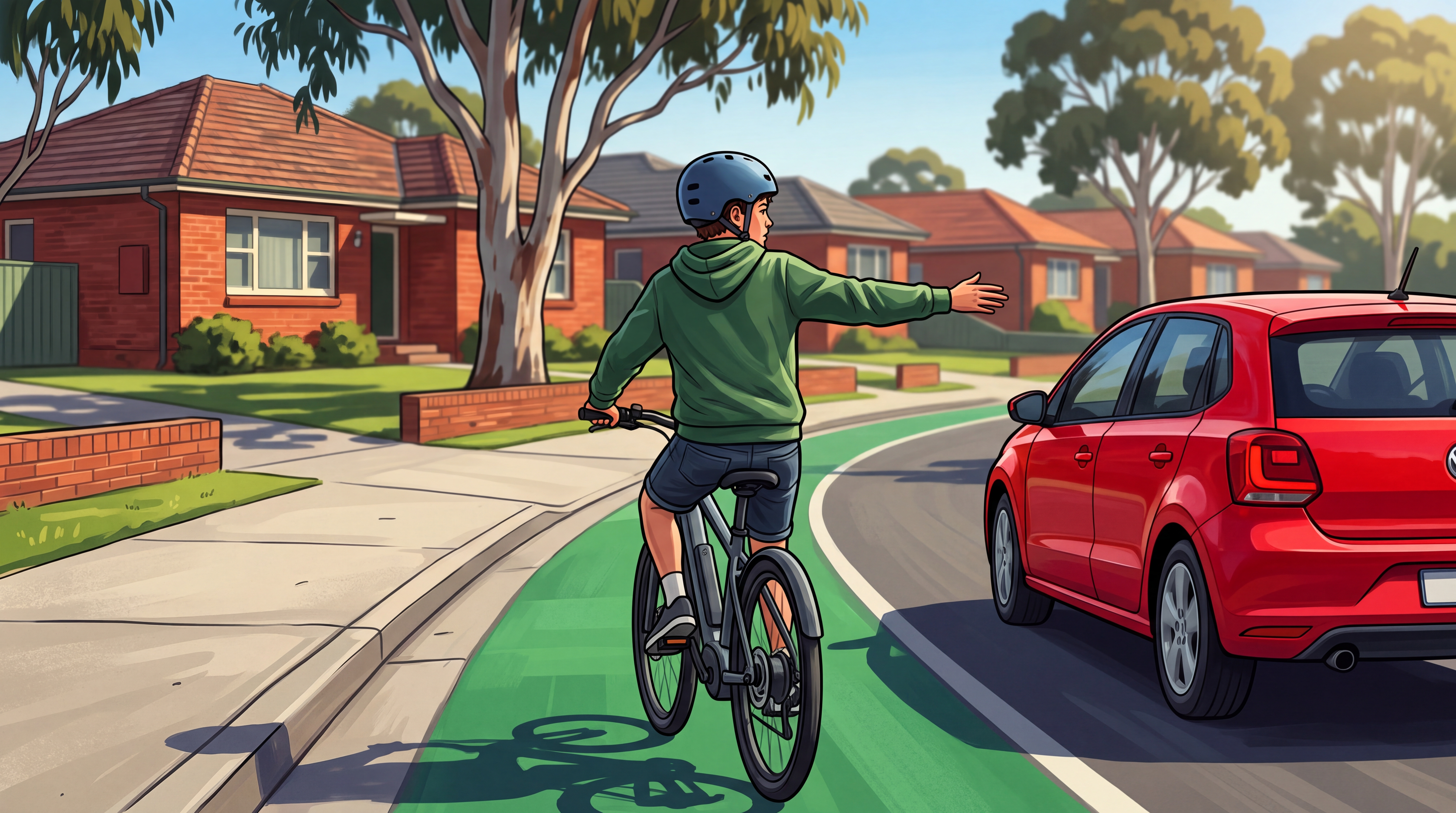
When you do need to leave the lane, run the sequence. Check over the shoulder on the side you're moving into (usually the right), signal, and check again before you move. When changing marked lanes, give way to vehicles travelling in the same direction in the lane you're entering. If there's no safe gap, slow down or stop safely and wait. After passing the hazard, check over the shoulder on the side you're moving back towards, signal, check again and give way before moving back. If you moved right around the hazard, that return check is to the left.
NSW Government's special road rules for bicycle riders says a hand signal is required when turning right or merging into the right lane (left signals, stop signals and signals during a hook turn are recommended rather than required), and recommends signalling about 30 metres before you turn or change lanes. A signal tells drivers your plan. It doesn't guarantee they've seen it, which is why the checks matter.
Level 3: Who else is allowed in your lane
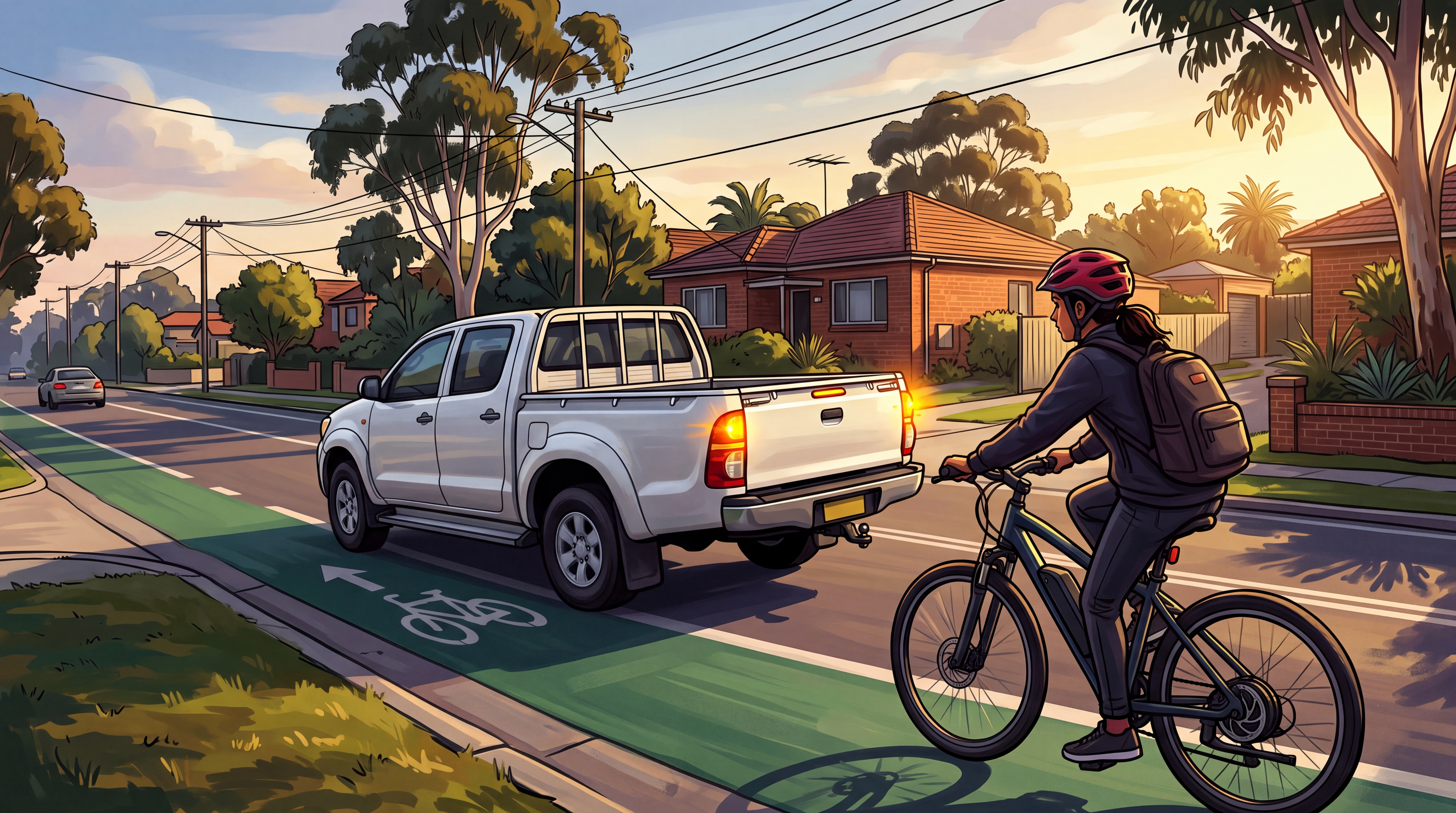
Know the exceptions: a bicycle lane can also contain other vehicles. Rule 153 says drivers, other than bike riders, must not drive in a bicycle lane, but it lists exceptions, and Rule 158 (NSW Road Rules 2014) adds more. Different exceptions come with different conditions:
where stopping or parking is legally allowed at a place in the bicycle lane, a driver can drive up to 50 metres in the lane to reach that place
public buses and taxis can drive up to 50 metres in the lane to pick up or drop off passengers, provided no other NSW law prohibits them from driving in that bicycle lane
a driver can use up to 50 metres of the lane where necessary for specific manoeuvres, including entering or leaving the road, or passing a vehicle that is turning right and signalling.
Drivers can also enter the lane where necessary to avoid an obstruction. That exception is separate from the 50 metre allowance.
So watch for vehicles moving into the lane ahead of you: indicators, brake lights and front wheels turning. Under Rule 148 (NSW Road Rules 2014), a driver moving into another marked lane must give way to vehicles travelling in the same direction in that lane, including you. Keep watching what they do rather than relying on them to get it right.
If a vehicle ahead signals left, hang back as a safety precaution. Rule 141 (NSW Road Rules 2014) says a bike rider must not pass an ordinary car on its left while it is turning left and signalling left. Separate rules cover trams, buses on tram tracks and vehicles with a do not overtake turning vehicle sign.
Parked cars next to a bike lane bring their own risk: doors. Leave clearance from parked cars and watch for doors opening. See NSW Government's hazard advice. Our guide on how to avoid getting doored goes deeper.
Level 4: Bus lanes, transit lanes and the lanes you can't use
You can ride in more lanes than you might think. NSW Government's special road rules for bicycle riders says bike riders can use ordinary bus lanes, transit lanes and truck lanes, and Rule 158 sets this out in law. The big exceptions: bike riders must not use bus only lanes, identified by "Bus only" or "Buses only" signs or road markings, and NSW Government's rules for riding bikes in traffic says bike riders are not permitted to ride along tramways.
That same page warns riders in bus lanes to be cautious of other vehicles using the lane, particularly near intersections. Under Rule 158, drivers may use an ordinary bus lane for up to 100 metres where necessary to enter or leave the road. That allowance doesn't apply to bus only lanes. So cars turning left may move into the lane in front of you.
Level 5: Riding the lane like a hero
Knowing the rules is level one. Riding them well is the real level up. Five habits worth locking in:
In the same marked lane, ride no more than two abreast, except when overtaking. Rule 151 (NSW Road Rules 2014) says you must not ride alongside more than one other rider in a marked lane unless you're overtaking, and when riding alongside another rider in the same marked lane, stay no more than 1.5 metres apart. In a narrow bike lane, single file is usually the smarter play.
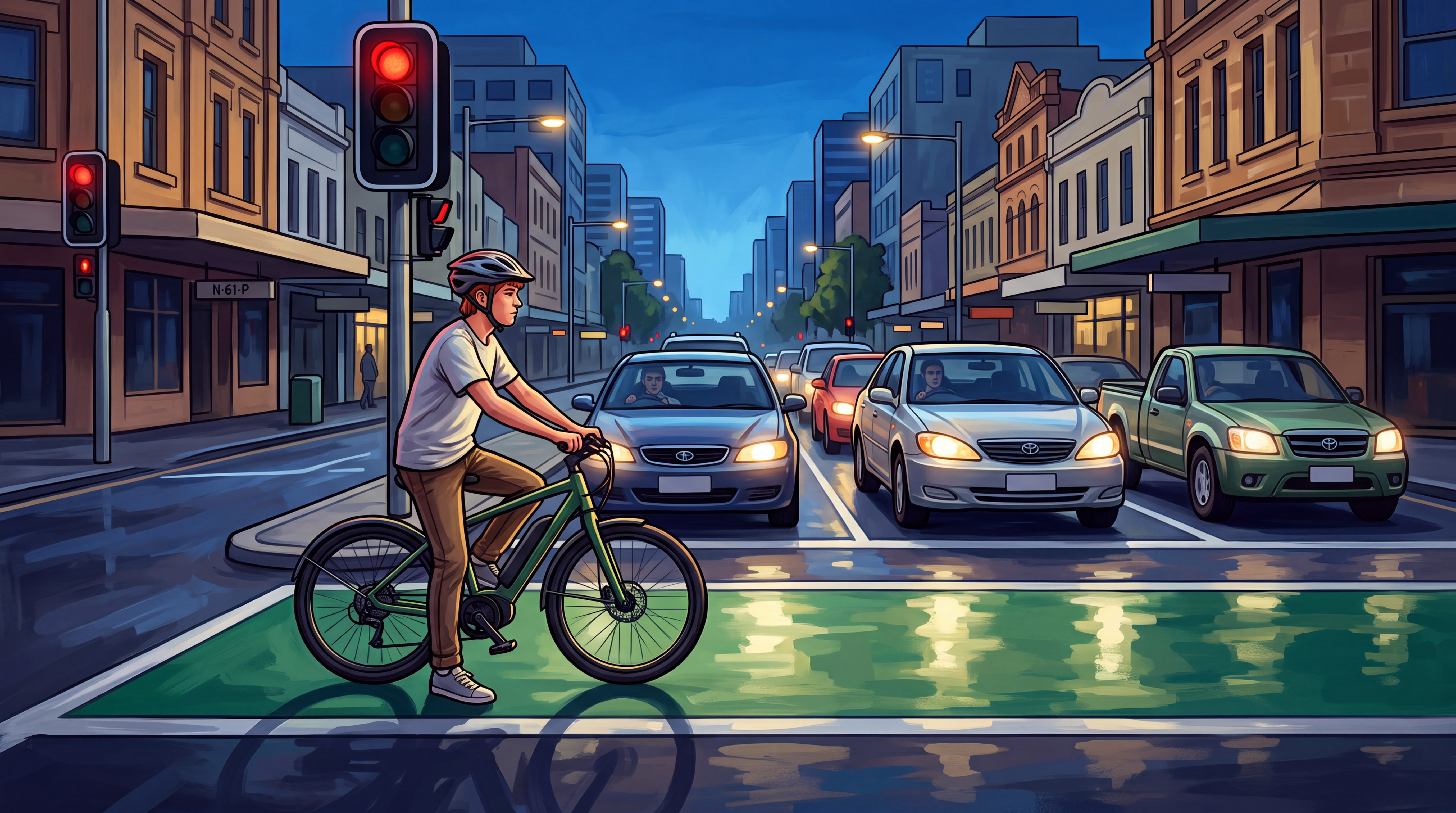
Use the bike box at red lights the right way. A bicycle storage area, or bike box, gives you a waiting spot ahead of the stop line for cars. Under Rules 247A and 247B (NSW Road Rules 2014), if you enter the bike box at an intersection showing a red traffic light or red arrow, enter from the bicycle lane unless you're not required to ride in that lane under the Road Rules. (A separate exception applies where another NSW law prevents entry from the bicycle lane and allows another way in.) Give way to vehicles already in the box. When entering, you must also give way to motor vehicles entering or about to enter the box under the green or yellow signal conditions set out in Rule 247B. A box that spans several lanes has extra give-way rules when any lights are green or yellow. As a safety precaution, don't move across lanes of moving traffic to reach or reposition within the box, and keep checking the traffic around you. Wait for the green signal that permits your movement before you go, and follow the road arrows.
Plan for the lane to end. Look ahead at how the lane finishes. If you need to change lanes, check towards that lane, signal, give way and move only when it's safe. Slow down or stop safely if you can't make the move.
Make yourself easy to read. Keep a predictable line and avoid unnecessary weaving. Before moving around a hazard, check beside and behind you. See NSW Government's hazard awareness advice.
Pick your speed for what's ahead. Choose a speed that gives you time to respond to hazards and stop safely, especially near bus stops, driveways and parked cars. Follow NSW Government's advice to adjust your speed to your surroundings.
Frequently asked questions
Do I have to ride in the bike lane in NSW?
If you're riding on a road with a bicycle lane for your direction, NSW Road Rule 247 says you must use it unless it's impracticable. That depends on the circumstances, for example a blockage or hazard in the lane. The rule doesn't cover road related areas such as the shoulder.
Can I ride my e-bike in a bus lane in NSW?
Yes, if your e-bike legally counts as a bicycle under NSW Road Rule 15-1, you can use an ordinary bus lane. Don't use bus only lanes or tramways as riding lanes. See NSW Government's riding in traffic guidance. Watch for cars turning left into the lane.
Can cars drive in a bike lane?
Yes, in limited circumstances. NSW Government explains the 50 metre allowances and the separate obstruction exception. Watch for vehicles moving into the lane.
These rules are for NSW. Other states and territories have their own road rules, so check your local transport authority if you ride outside NSW.
BikeHero is designed to help Australian teens ride smarter and give parents peace of mind. Planned lessons include Where to Ride, Traffic Rules and Traffic Navigation. Find out more at bikehero.au.


