NSW E-Bike Seizure Laws: What Parents Need to Check
NSW e-bike seizure laws took effect on 21 August 2026. Here's how to check your teen's e-bike meets the NSW rules, and what happens if police take one.
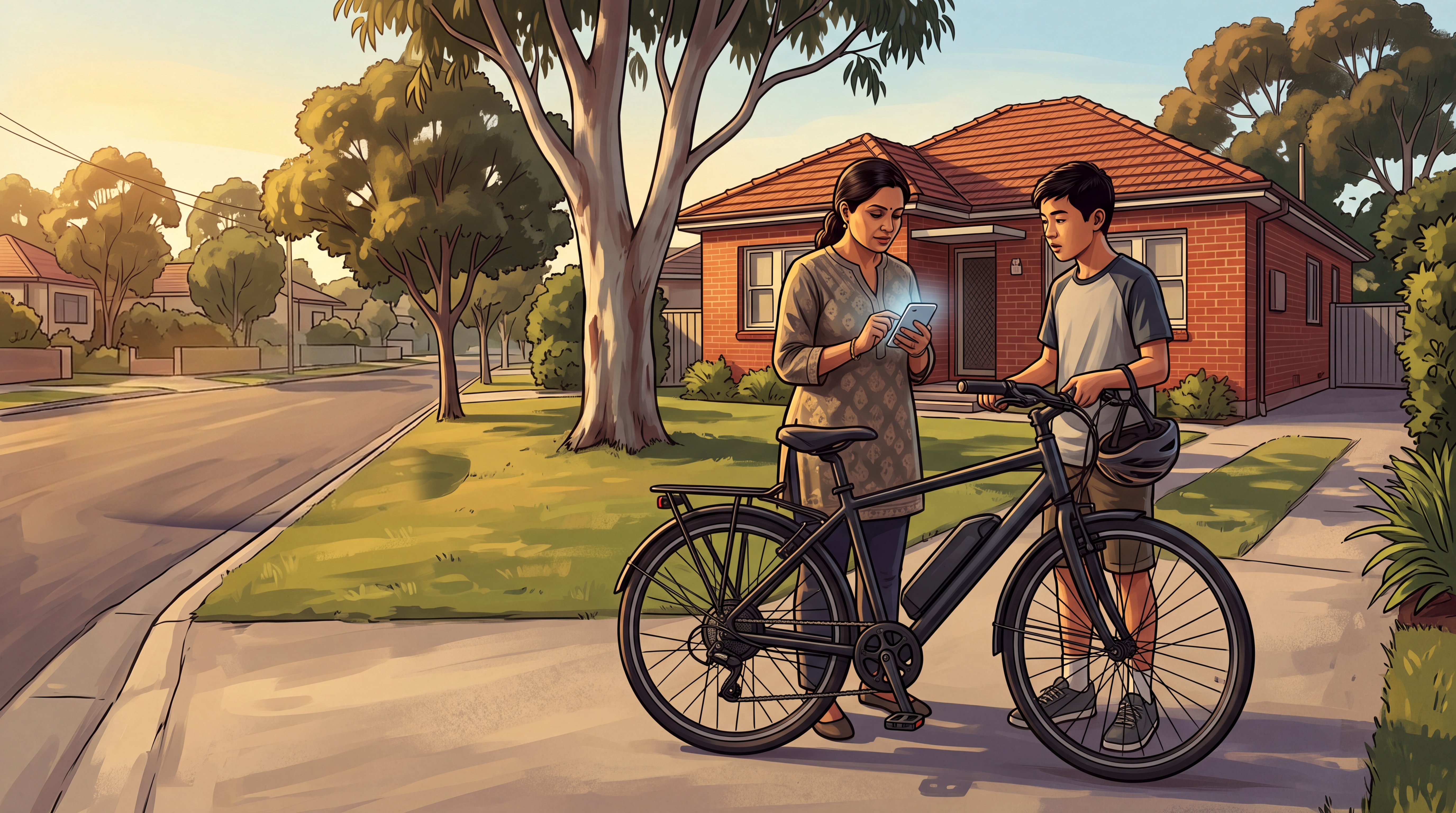
NSW e-bike seizure laws came into effect on 21 August 2026, and they change what is at stake if your teen rides an e-bike that does not meet the NSW rules. Transport for NSW says police and authorised officers now have expanded powers to seize illegal e-bikes used on roads and road-related areas, and to dispose of them (Transport for NSW). The job for parents is checking that your teen's e-bike meets the NSW requirements before they ride.
Can police seize my teen's e-bike in NSW?
They can if the seizure conditions below are met. An e-bike that meets rule 15-1 of the NSW Road Rules counts as a bicycle (NSW Road Rules 2014, rule 15-1).
What changed on 21 August 2026
The detail sits in the Road Transport Act 2013. Section 79A lets an officer seize a vehicle if they have a reasonable suspicion that it is a "non-registrable motor vehicle" and that someone used it on a road or public place within the last 28 days (Road Transport Act 2013, s79A). In broad terms, that is a motor vehicle, other than one exempted from registration, that has no vehicle identification number permanently marked on its frame or chassis and that, because of its design or construction, does not meet the prescribed vehicle standards and so cannot be registered (Road Transport Act 2013, definitions).
Three parts of the Act matter for families:
The 28-day window. The officer's suspicion is about use in the last 28 days, not only what they see at that moment.
Surrender notices. An officer can instead issue a written surrender notice with a handover date at least 48 hours after the notice is given. Not complying is an offence (s255A).
Notice to parents of under-16s. If the rider is under 16, the notice of impounding, or a surrender notice, must also go to a parent or guardian who can reasonably be located. The bike can still be impounded if a parent cannot be found (s79A(5) and (6) and s255A(2) and (3)).
What happens after a bike is seized
The rules for getting a seized bike back are restrictive. Under section 79B, an owner can apply to the impounding authority within 14 days after the bike is seized or surrendered, using the approved form and providing evidence of ownership. The application must include a declaration that the applicant is not the person whose suspected use led to the seizure, or a member of that person's immediate family, and that the suspected use happened without the applicant's knowledge and consent (Road Transport Act 2013, s79B). The Act's definition of immediate family includes a parent, step-parent or guardian. Approval is not automatic, and any fees that apply must be paid before a bike is returned.
If no application is made, the bike is forfeited 15 days after it was seized or surrendered, and it can then be sold or destroyed (s79B).
If your family ever receives one of these notices, read it closely. The deadlines are short, so get legal advice promptly if you dispute the seizure.
What makes an e-bike legal to ride in NSW
The NSW Government describes two permitted e-bike categories, and in both the rider must mainly propel the bike by pedalling (NSW Government, choosing a legal e-bike).
Up to 500 watts. A pedal-assist e-bike with a maximum continuous rated power of up to 500 watts. The power must reduce progressively as the bike goes faster than 6 km/h, and cut off when the bike reaches 25 km/h, or when the rider stops pedalling above 6 km/h (NSW Road Rules 2014, rule 15-1). Transport for NSW adds that a throttle-only function, where the motor moves the bike without pedalling, must cut out at 6 km/h (Transport for NSW).
Power-assisted pedal cycles. A separate, lower category. Motors with a combined maximum output of up to 200 watts, the bike cannot be propelled by the motor alone, it weighs less than 50 kg including batteries, and it has a height-adjustable seat (NSW Government).
Petrol-powered bicycles are illegal on NSW roads and public paths (NSW Government).
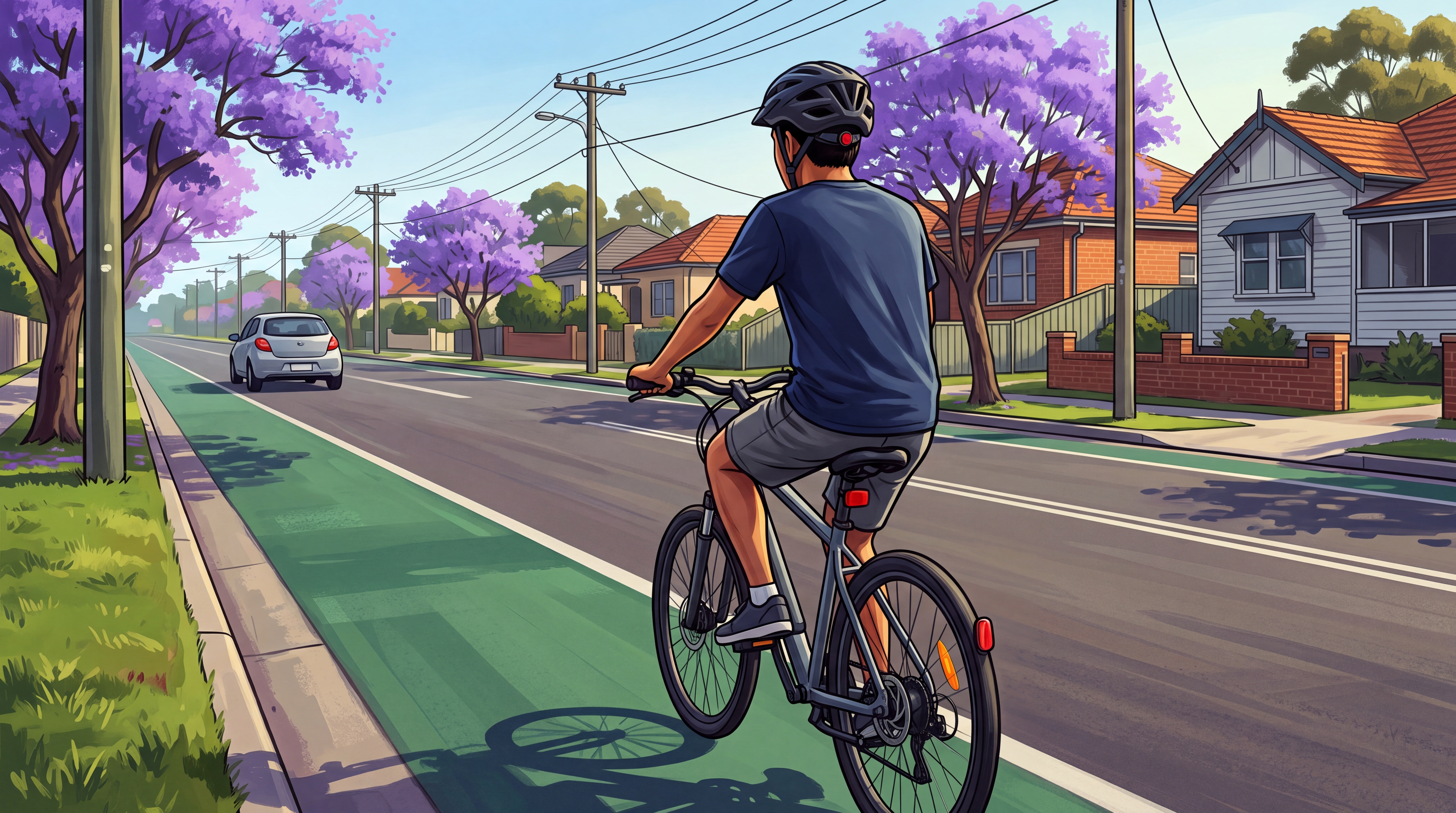
Where your teen rides is a separate set of rules. In NSW, riders aged 16 and over generally cannot ride on the footpath. Exceptions include an adult accompanying and supervising a rider under 16, and riders aged 16 or 17 accompanying a rider under 16 when all the riders under 18 are supervised by an adult (NSW Government, where to ride).
NSW law has already set a date for the next change. Rule 15-1 repeals the 500 watt and 200 watt limbs at the end of 28 February 2029, leaving e-bikes that comply with the European standard EN 15194 (NSW Road Rules 2014, rule 15-1(5)). Transport for NSW says that from 1 March 2029, e-bikes must meet EN 15194 with a maximum continuous power of 250 watts, and advises choosing an EN 15194 compliant bike if you are buying now (Transport for NSW).
The traps that catch families out
A software limit does not make an over-limit e-bike legal. Transport for NSW is direct about this: e-bikes that exceed the limits are illegal even if the power or speed is restricted by software, such as an app, a switch or code. Hacking or tampering with an e-bike may also make it illegal (Transport for NSW).
Legal to sell is not the same as legal to ride. E-bikes covered by NSW electrical safety rules must be certified before sale, with the bike, battery and charger each carrying its own electrical safety approval mark. Some products, such as e-trikes and e-bikes that do not use a rechargeable lithium battery, may fall outside these rules. That is a product safety rule for sellers, and the NSW rules for sale include a standard for e-bikes above 500 watts (NSW Government, supplying e-micromobility products). An approval mark is about electrical safety for sale. It does not tell you the bike can be ridden on a NSW road.
Online listings and second-hand bikes. Transport for NSW notes that not all e-bikes sold in Australian shops or online are legal to ride on NSW roads (Transport for NSW). The same caution applies to a second-hand bike, where you may not know what has been changed since it left the shop.
A quick check for parents
Work through these with your teen:
Find the rated power. Check the manufacturer's documentation for that exact model. For a pedal-assist e-bike, look for the maximum continuous rated power. For a 200 watt power-assisted pedal cycle, look for the combined maximum motor output. Treat a listing or a motor label as a starting point, then check the other requirements.
Look for EN 15194 paperwork. If you are buying, Transport for NSW advises choosing an EN 15194 compliant model (Transport for NSW). Look for the marking and ask the retailer for compliance documentation for the exact model. A sticker alone is not a complete check.
Check for a throttle. For a pedal-assist e-bike, check the manual or ask the retailer whether throttle-only power cuts out at 6 km/h. A 200 watt power-assisted pedal cycle cannot be propelled by the motor alone. A throttle check on its own does not prove the bike complies.
Ask about apps and speed settings. If the bike has a companion app, check what settings it offers. A setting that lets the motor assist beyond the permitted cut-off is a warning sign.
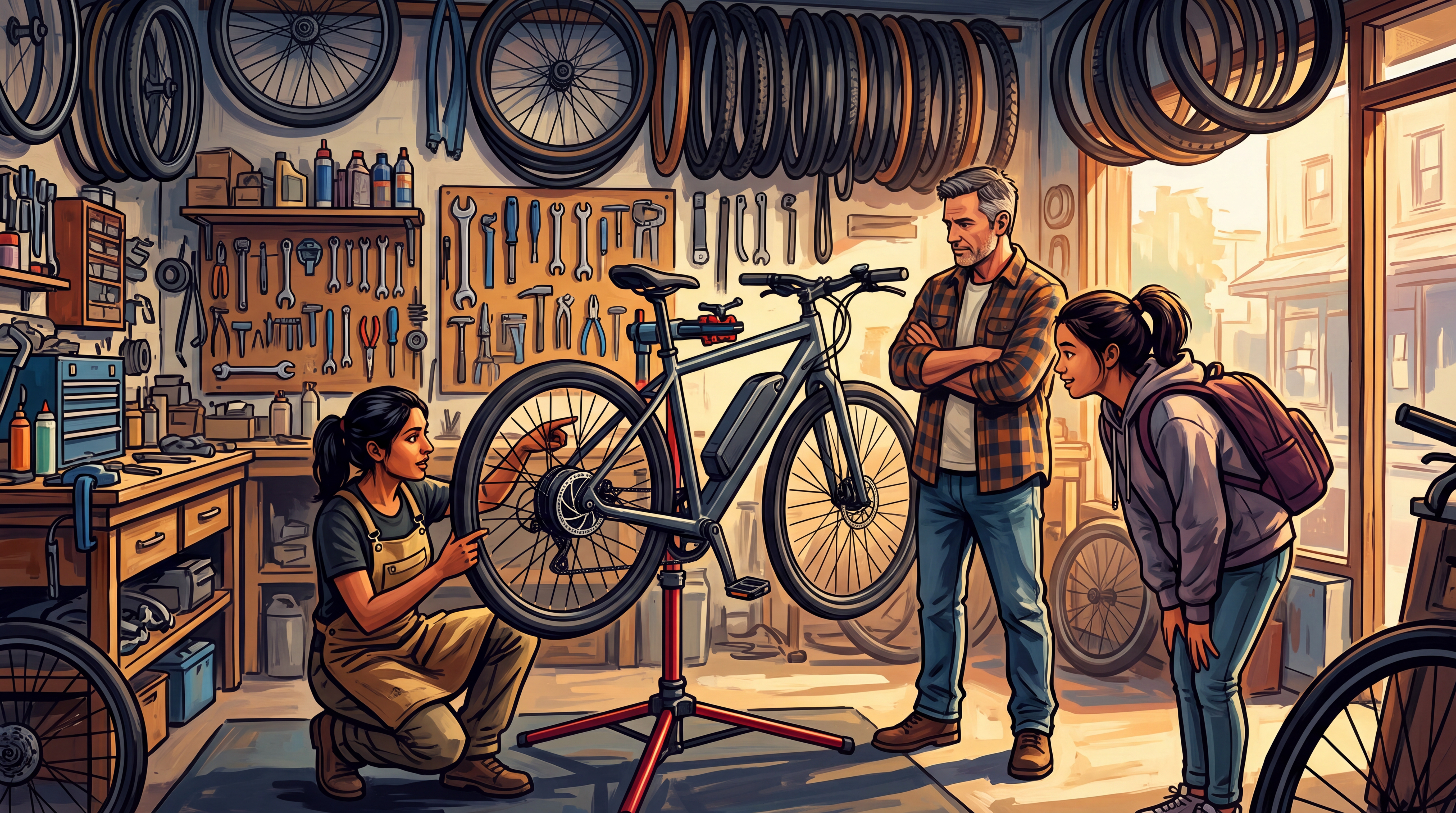
If in doubt, get it checked. Ask a retailer or repairer who knows that model to check its specifications and any modifications. If you still are not sure it complies, keep it off public roads and paths.
Talking to your teen about it
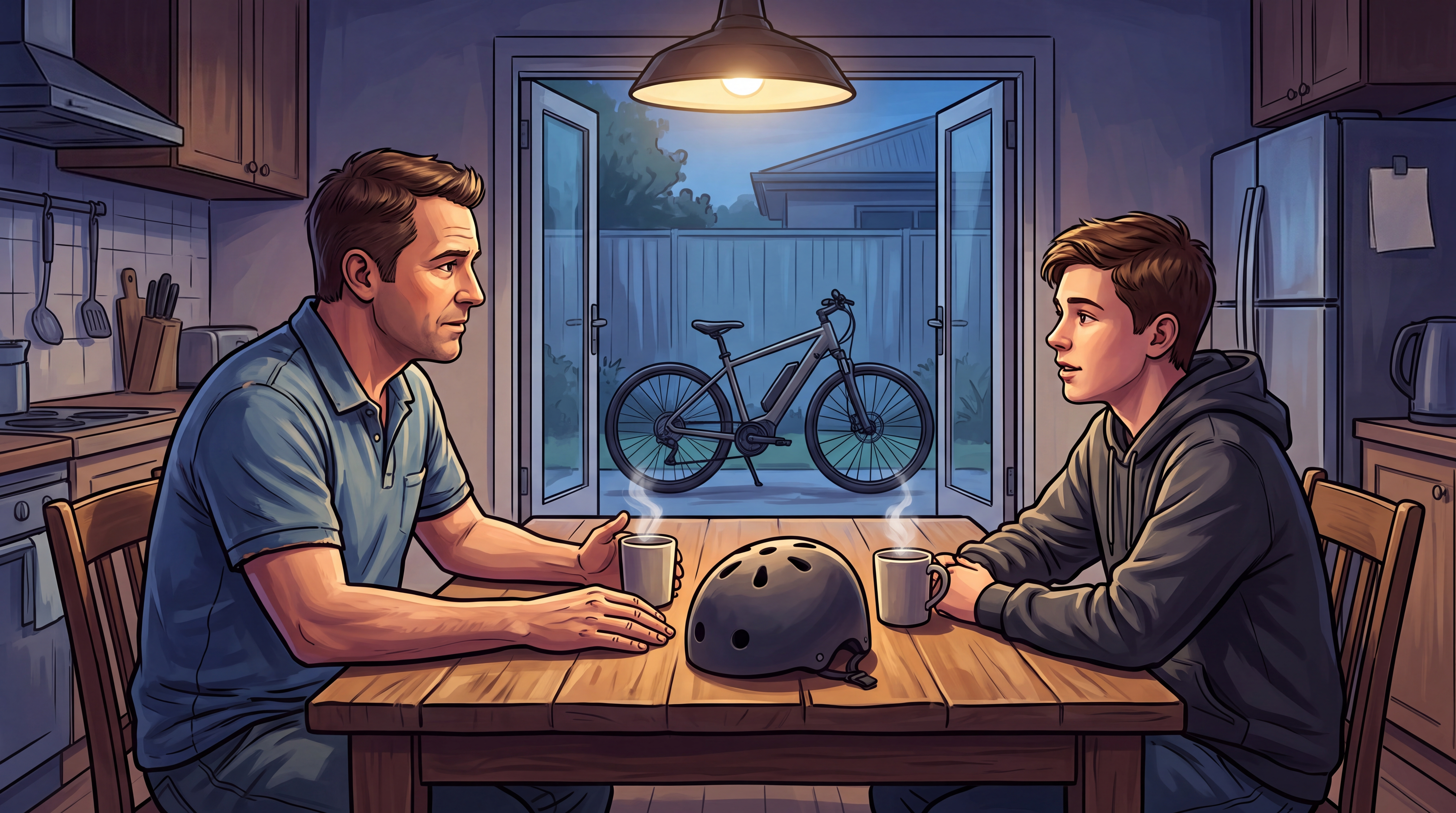
Explain the change plainly: since 21 August 2026, police can seize an e-bike when the conditions above are met, and the family may not be able to get it back.
Agree to talk before anyone changes settings or adds parts, and to check that any change keeps the bike within the rules. Then check the bike together. Worth a chat over dinner.
Frequently asked questions
Is a 500 watt e-bike legal in NSW?
Checked on 19 September 2026, NSW Road Rules allow a pedal-assist e-bike with up to 500 watts of maximum continuous rated power, if it also meets the speed and pedalling conditions. That limb is repealed at the end of 28 February 2029 (rule 15-1).
Will I be told if police impound my teen's e-bike?
If your teen is under 16 and police impound the bike under section 79A, the Act says the notice of impounding must also be given to a parent or guardian who can reasonably be located (s79A).
If the speed is limited in an app, is the e-bike legal?
Not if the bike itself exceeds the limits. Transport for NSW says an e-bike that exceeds the limits is illegal even if its power or speed is restricted by software, an app or a switch (Transport for NSW).
Help your teen ride smarter
BikeHero is designed to help Australian teens ride smarter and give parents peace of mind. Planned lessons include E-Bike Basics, Where to Ride and Traffic Rules. Find out more at bikehero.au.


