Buying an E-Bike for Christmas: A NSW Parent's Checklist
Buying an e-bike for Christmas? A NSW parent's checklist on product approvals, road-use requirements and gift rights. Find out more at bikehero.au.
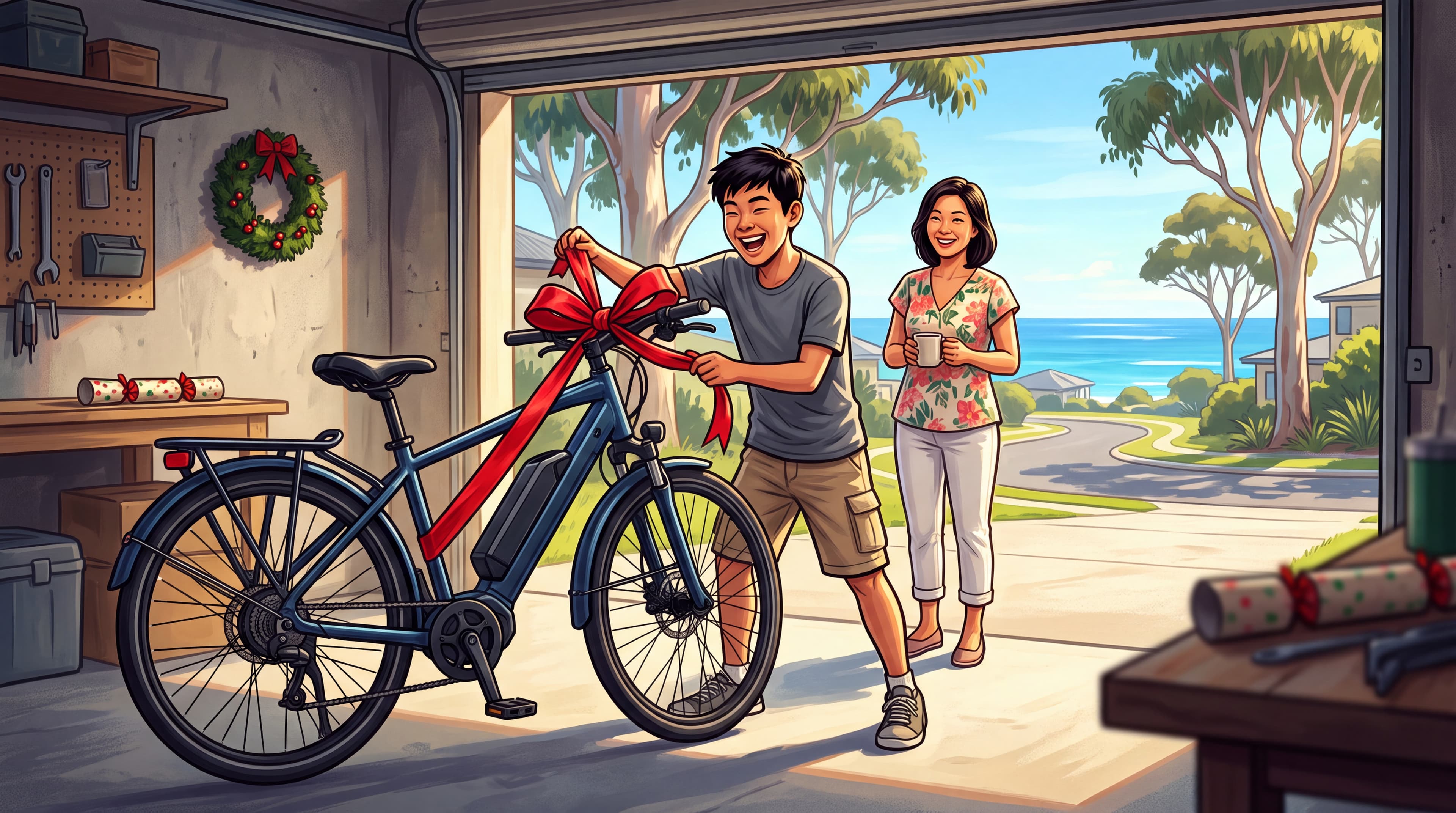
If an e-bike is on your list for Christmas 2026, make these checks before you buy. NSW's certification and marking requirements for covered e-bikes took effect on 1 February 2026, and NSW guidance states that EN 15194 compliance will be required for e-bikes used on NSW roads and road-related areas from 1 March 2029. Here is what to look for, what to ask, and what to keep.
What should you check before buying an e-bike for Christmas?
For an e-bike covered by NSW's declared electrical article requirements, check the approval markings on the bike, battery and charger. Check the retailer's EN 15194 compliance or non-compliance tag for that model. Confirm the bike is legal to ride on NSW roads, not just legal to sell, and keep the receipt.
Legal to sell is not the same as legal to ride
From 1 February 2026, e-bikes and batteries covered by NSW's declared electrical article requirements must be tested, certified and marked before sale in NSW. NSW Fair Trading says the bike, the battery and the charger each need their own Certificate of Approval and safety mark. The mark has to be on the product itself, not only the box, and online listings must show it too (NSW Government, new standards for lithium-ion batteries).
That is a product safety rule about what a shop can sell. Riding on the road is covered by different rules. The NSW Government's own e-bike FAQs put it plainly: not all e-bikes sold in Australia are legal to ride on NSW roads (NSW e-bike FAQs). Fair Trading's accepted electrical safety standards include UL 2849:2022 for e-bikes over 500 watts. So a certified mark on its own does not tell you the bike is road legal.
A 500 watt label alone does not settle it either. Transport for NSW describes the current electrically power-assisted category as allowing up to 500 watts maximum continuous rated power, with assistance progressively reducing above 6 km/h and cutting off at 25 km/h or when pedalling stops above 6 km/h (current assistance conditions). Its guidance states that EN 15194 compliance will be required for NSW road use from 1 March 2029 (transition guidance).
Transport for NSW guidance adds that the rider must primarily propel the bike by pedalling, and describes the power-assisted pedal cycle as having one or more motors with a combined maximum power output of up to 200 watts, weighing less than 50 kg including batteries, with a height-adjustable seat, and unable to be propelled only by its motors (NSW Government, choosing a legal e-bike). Ask for evidence that the particular model meets the current requirements and EN 15194.
Do not rely on a software setting to make an overpowered bike road legal (NSW e-bike FAQs). Ask for the maximum continuous rated power in writing, together with evidence that the complete bike meets NSW road-use requirements. Use the BikeHero e-bike legal checker as a starting point, then confirm current requirements with your state or territory's transport authority.
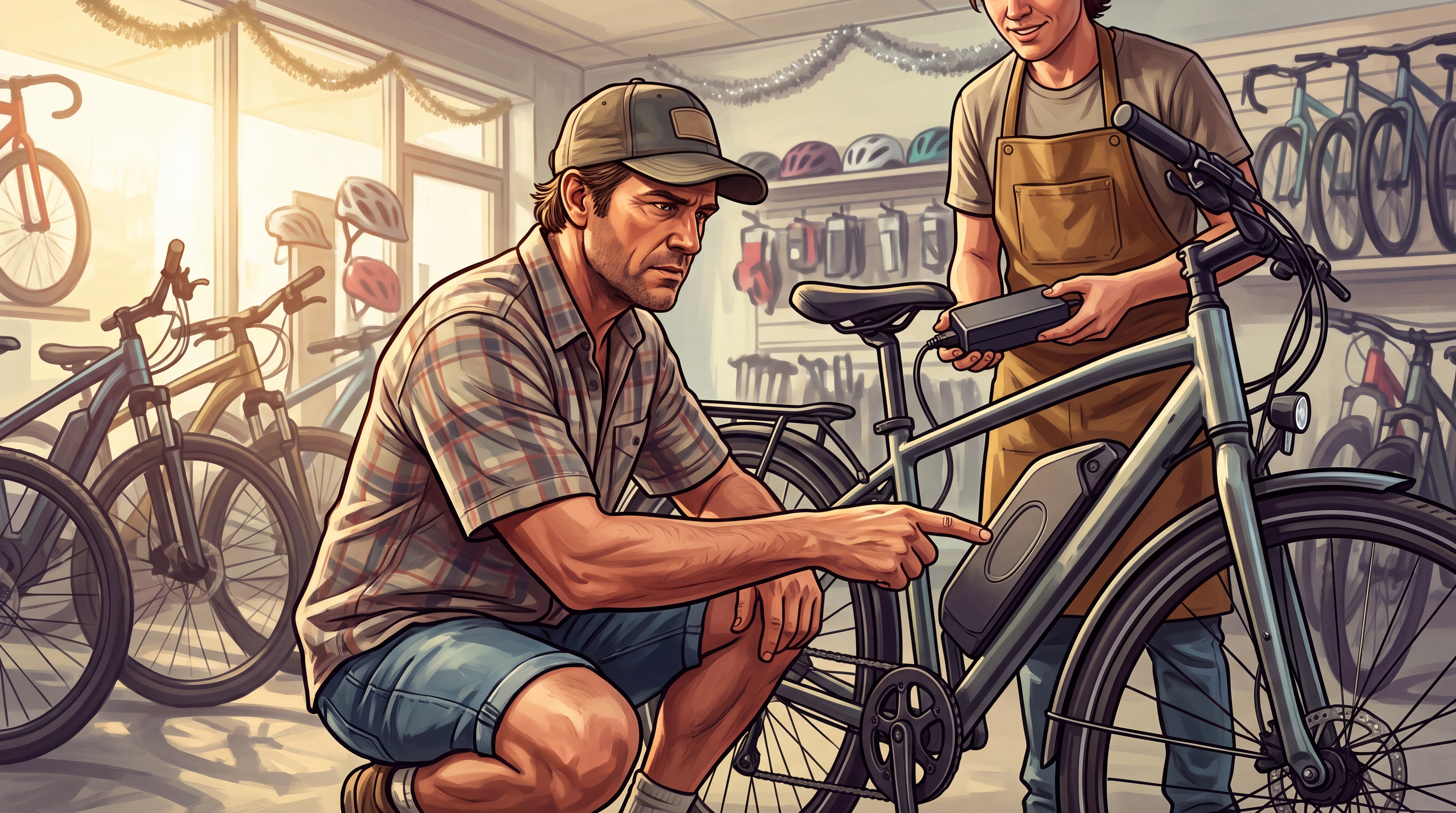
Check the NSW road-use requirements applying from 1 March 2029
When choosing an e-bike for Christmas 2026, think about the road-use requirements that will apply in 2029. The NSW e-bike FAQs state that EN 15194 compliance will be required for NSW road use from 1 March 2029 and recommend choosing a compliant model now. If you are unsure, the FAQs say to ask your retailer.
On 2 December 2025, the NSW Government published these shopping recommendations for parents (NSW ministerial release). It suggested looking for:
a clear EN 15194 sticker or certification
a motor output of no more than 250 watts
a reputable brand with proper safety documentation
a model that has not been modified, chipped or had its speed limiter removed.
For Christmas 2026, ask for evidence of EN 15194 compliance. A wattage label alone does not establish that a bike meets the road-use requirements.
The marks to look for, in store and online
For a covered e-bike sold in NSW, look for the electrical safety approval number on the bike, battery and charger. This is different from the Regulatory Compliance Mark (RCM). Check that the supplied battery and charger match the vehicle's approval certificate. A different combination needs the appropriate testing and certification before sale (NSW Fair Trading).
NSW Fair Trading also publishes a list of certified e-micromobility products. Fair Trading says the list is not exhaustive and other models may be certified but not listed. If a model is missing, ask the supplier whether it has been certified.
Look for the EN 15194 tag too. For e-bikes covered by these NSW requirements, Fair Trading requires a compliance or non-compliance tag on each displayed bike and each online listing. A green tag says the bike is EN 15194 compliant. A red tag indicates non-compliance, and Fair Trading states that from 1 March 2029 e-bikes that do not comply with EN 15194 cannot be lawfully used on NSW roads and road-related areas. A bike with a red tag can still be sold if it meets the other requirements (NSW Fair Trading, information requirements). Sellers must also give you product details and safety information for the specific bike. Ask for it, and keep it with the manual.
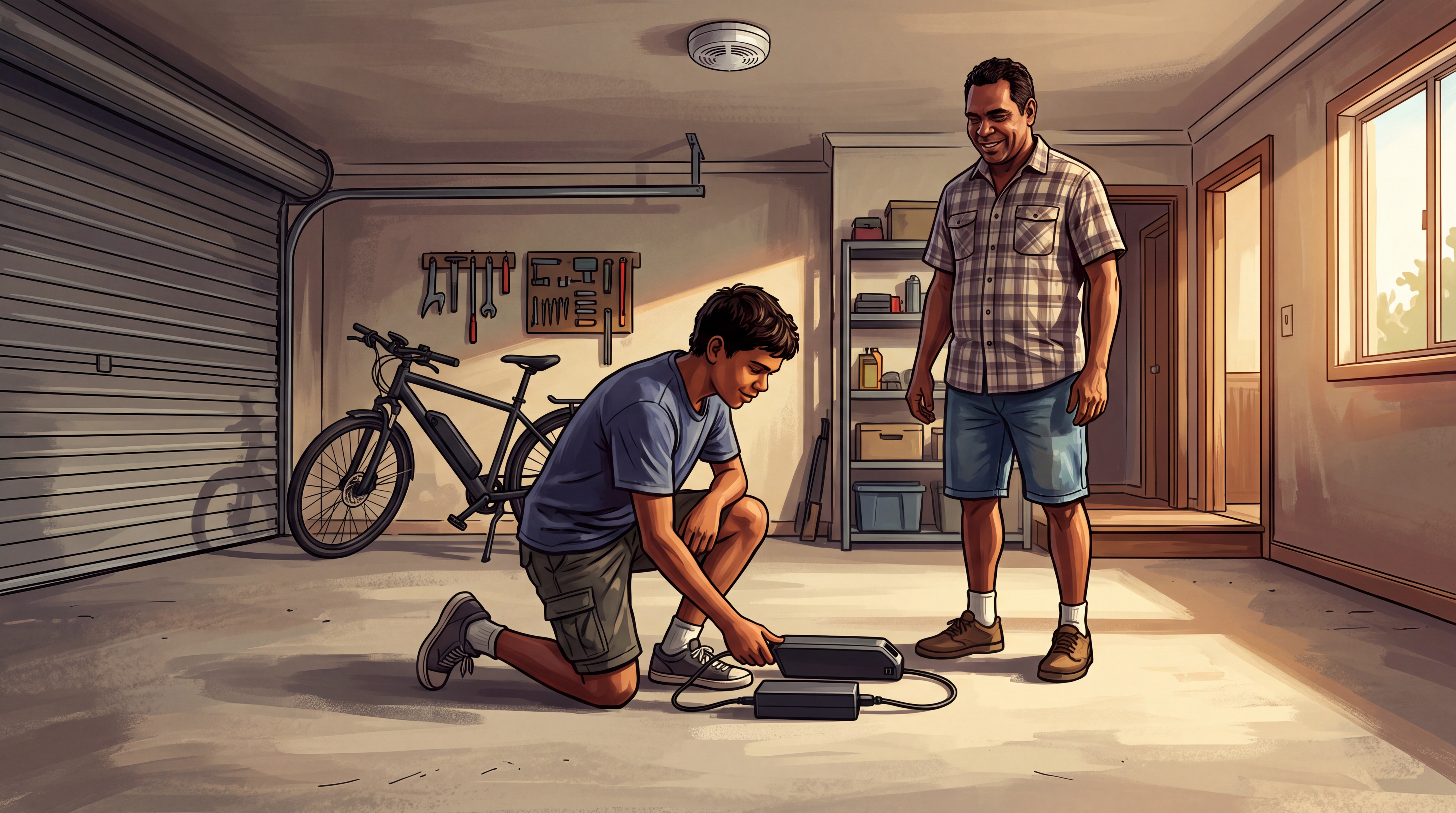
Set up the charging spot before Christmas morning
Fire and Rescue NSW describes lithium-ion batteries as the fastest growing fire risk in New South Wales (FRNSW e-bike and e-scooter battery safety). So choose the charging and storage spot before the bike arrives, using FRNSW's advice (FRNSW, how to prevent battery fires):
pick a spot away from living spaces, such as a garage, shed or carport, that is protected from heat and moisture
charge on a hard surface that cannot catch fire, like concrete or tiles, never on beds, sofas or carpet
keep it away from bedrooms and living rooms, soft furnishings, and anything that can burn, like blankets, clothing and paper
keep it away from exits and escape paths, including hallways and stairwells
make sure a working smoke alarm is installed where it is charged or stored, or a heat alarm where a smoke alarm cannot be installed
never charge while you are asleep or away from home, never leave it charging unattended for long periods, and avoid overnight charging
disconnect it once the battery is fully charged
use the supplied charger, or certified replacement charging equipment confirmed compatible with the battery specifications, and check the approval markings. A matching plug or an approval mark alone does not make a charger compatible
do not use or charge a damaged battery, including one that is swollen, leaking, overheating, cracked, dented, punctured or crushed, or has been in water or exposed to fire.
Keep the receipt: consumer rights on a gifted e-bike
An e-bike bought from a business does not lose its consumer guarantees when it is given as a gift. NSW Fair Trading says people who receive a product as a gift are entitled to the same automatic consumer guarantees (NSW Government, rights to a repair, replacement or refund). Consumer guarantees do not require change-of-mind refunds, but a business must honour any change-of-mind policy it offers (ACCC).
The ACCC says a business is entitled to ask for some form of proof of purchase, such as a receipt, when a product is returned. It lists a product being unsafe as one example of a major problem, and when a product has a major problem the business must give the consumer the choice of a refund or a replacement. The ACCC also says businesses must not tell consumers to go to the manufacturer for a remedy (ACCC, repair, replace, refund, cancel). A warranty provides additional promises without replacing consumer guarantees (ACCC warranties). A blanket "no refunds" sign cannot remove those rights (ACCC remedies).
In practice, keep a folder with the receipt, the approval details, the safety information and the manual. This keeps the key purchase records together if you need to raise a problem.
Before the first ride
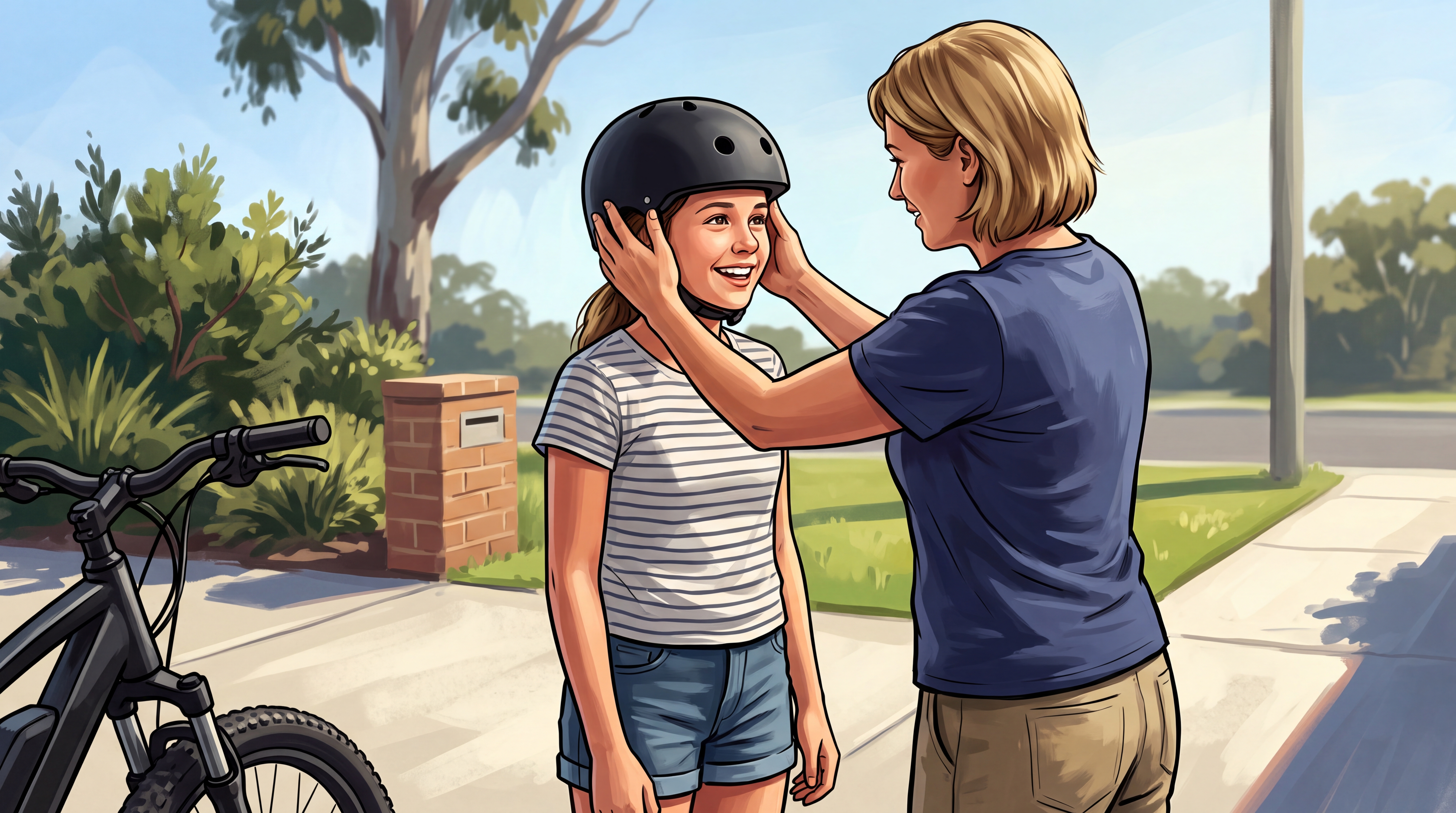
Before your teen rides, check that they are wearing an approved bicycle helmet, securely fitted and fastened (NSW Government, wearing the right gear). Also check the bike has at least one effective brake and a working bell, horn or similar warning device. For riding at night or in hazardous weather, NSW requires a flashing or steady white front light visible from at least 200 metres, a flashing or steady red rear light visible from at least 200 metres, and a red rear reflector visible from at least 50 metres when lit by another vehicle's low-beam headlight (NSW equipment requirements). Agree on a route that suits your teen's age and the rules on where e-bikes can be ridden, and set household riding rules. Make it a household rule not to alter the motor assistance, power limits or speed limiter, because the NSW e-bike FAQs note that an e-bike modified so it no longer fits a legal type of e-bike is no longer legal. The Government's December 2025 message encouraged parents to check compliance information and talk with their teen about staying safe.
Frequently asked questions
Is a 500 watt e-bike legal to ride in NSW?
A 500 watt label alone does not establish legality. NSW Government guidance checked on 20 October 2026 describes a current limit of up to 500 watts, subject to assistance conditions, and states that EN 15194 compliance will be required for NSW road use from 1 March 2029 (NSW guidance, current assistance conditions). Check all current assistance conditions and ask for evidence of EN 15194 compliance before buying (NSW e-bike FAQs).
The model is not on the Fair Trading list. Does that mean it is not certified?
Not necessarily. Fair Trading's list is not exhaustive. Ask the supplier for certification details and check the approval markings on the bike, battery and charger.
Can my teen get a refund if the gifted e-bike turns out to be faulty?
Gift recipients keep the buyer's consumer guarantees. Refund rights depend on whether a consumer guarantee has been breached and the nature of the problem. The seller can assess the bike first. Damage caused by misuse does not itself create a right to a remedy. Where a consumer guarantee has been breached: a major problem gives a choice of refund or replacement, while for a minor problem the business normally has the chance to fix it at no cost. If it cannot or will not do so within a reasonable time, you can seek a refund or replacement, or have it repaired elsewhere and recover the reasonable cost. Keep proof of purchase (NSW gift rights, ACCC remedies).
BikeHero is designed to help Australian teens ride smarter and give parents peace of mind. Planned lessons include E-Bike Basics, Battery Safety and Traffic Rules. Find out more at bikehero.au.


