Your Teen's New E-Bike: A Parent's First-Week Plan
New e-bike for your teen this Christmas 2026? A parent's first-week plan: safe charging, helmet fit, practice and house rules. More at bikehero.au.
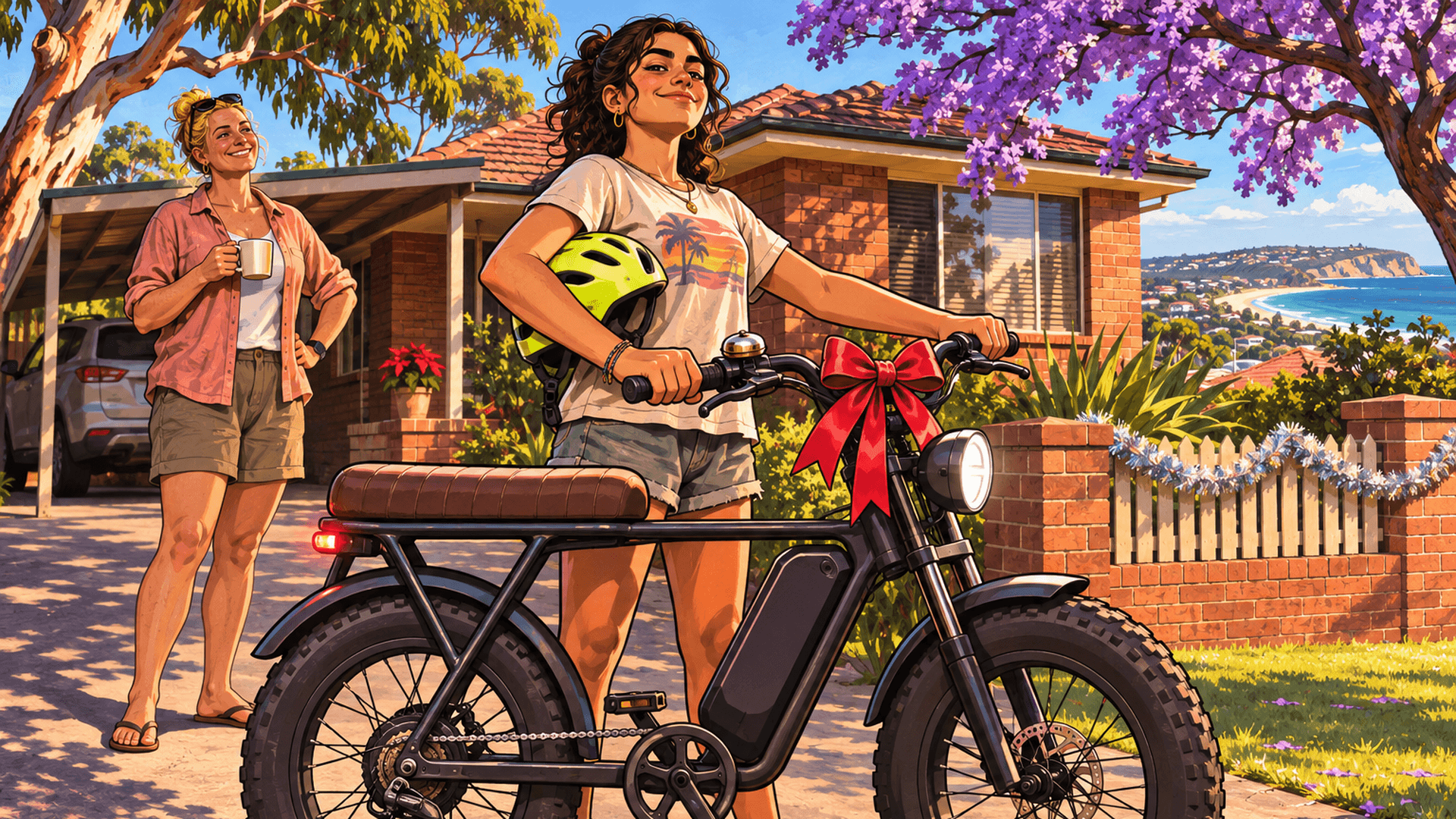
If a new e-bike for your teen is waiting under the tree for Christmas 2026, use the first week to work through the setup and riding checks together. Take longer if your teen needs more practice before riding in traffic.
This guide uses NSW examples. Before any riding practice, check your state or territory's current requirements for the bike, rider age, licences, supervision and permitted riding locations.
What should you do in the first week with a new e-bike? Work through the home battery safety checklist below, fit the helmet, and check the brakes, warning device, lights and rear reflector. Then practise in a suitable area before considering traffic, ride a permitted route together and agree on house rules.
Day one: set up safe charging at home
Fire and Rescue NSW describes lithium-ion batteries as the fastest growing fire risk in New South Wales. Before the first charge, set up the spot using its e-bike and e-scooter battery safety advice and its tips for preventing battery fires:
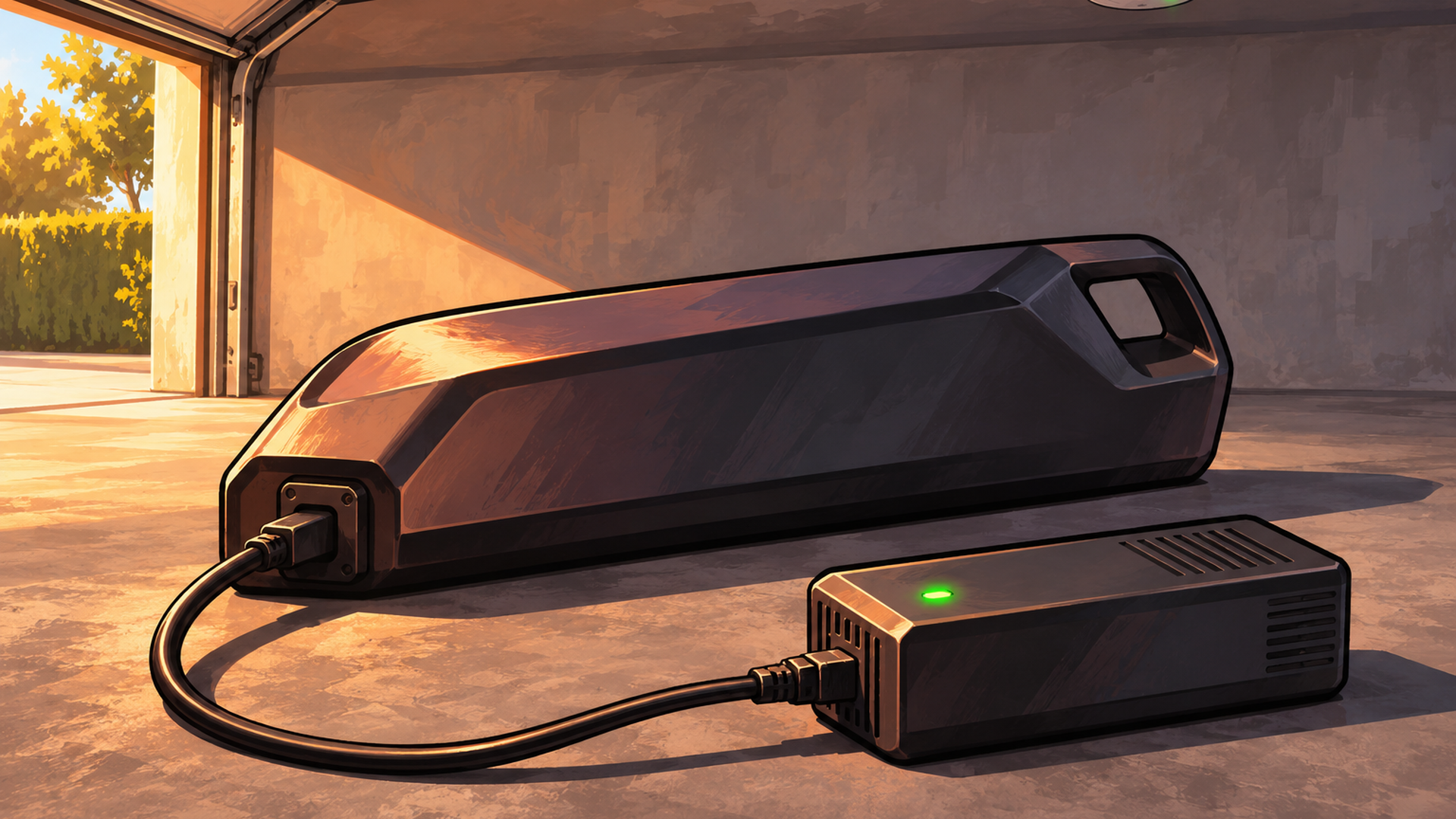
Charge in an open area like a garage or shed, away from exits.
Only charge on hard surfaces that can't catch fire, like concrete floors or tiles.
Don't charge on beds, sofas or carpet, or in or near living spaces such as bedrooms or living rooms.
Keep blankets, clothing, paper and anything else that could catch fire away from it.
Don't charge or store the battery near exits or along escape paths, and keep it away from heat and moisture.
Make sure the area has a working smoke alarm, or a heat alarm where a smoke alarm can't be installed.
Don't charge while you are asleep or not at home, and avoid leaving it charging unattended.
Once the battery is full, disconnect it from the charger.
Use the charger that came with the bike or battery. FRNSW warns that a matching plug does not mean a charger is compatible. Its charger guidance says to use the supplied charger or certified equipment compatible with the battery's specifications, and to check for the Regulatory Compliance Mark.
Don't use or charge a damaged battery. FRNSW's warning signs include swelling or bulging, leaking, cracks, dents, punctures, crushing, overheating, and a battery that has been wet or in water. Follow FRNSW's damaged-battery guidance if you see any of these. If a battery is smoking or on fire, evacuate straight away, avoid breathing the smoke, close doors only if it is safe, keep everyone out and call Triple Zero (000) from a safe place, following FRNSW's emergency advice.
Show your teen the spot and ask them to explain the reasons back to you. Talk through anything they are unsure about.
Fit the helmet properly
In NSW, rule 256 requires bicycle riders to wear an approved helmet securely fitted and fastened on their head, unless a legal exemption applies. Check that the helmet sits correctly and the straps are snug.
The NSW Government's guide to wearing the right cycling safety gear gives three quick checks:
Tilt the helmet forward until the front is two fingers above the bridge of the nose.
Fasten and straighten the buckles and straps, and adjust for a snug fit.
One finger should fit between the buckle and the chin while the helmet is firmly in place.
It also advises against wearing a hat or beanie underneath, and says to replace a helmet that has been damaged or in a crash, has cracked foam, has worn or frayed straps, or no longer fits. Do the fit check together, then let your teen do it on their own while you watch.

Check the bike is ready for the road
Before the first real ride, walk around the bike together. Check the bike is legal to ride in NSW (see below), then check its required equipment. Under NSW road rules for bicycle riders, it needs at least one effective brake and a working bell, horn or similar warning device (NSW special road rules for bicycle riders).
In NSW, rule 259 applies at night or in hazardous weather conditions causing reduced visibility. The bicycle or rider must display a flashing or steady white light clearly visible for at least 200 metres from the front, a flashing or steady red light clearly visible for at least 200 metres from the rear, and a red reflector clearly visible for at least 50 metres from the rear when lit by a vehicle's headlight on low beam (NSW Road Rules, rule 259). Fit and check the lights and rear reflector before the first ride.
Check that your teen can stop and support the bike securely, and operate the brakes comfortably. Ask the retailer to check the frame size, saddle position and brake reach, and see the NSW Government's advice on choosing a bicycle.
Before riding on NSW roads or public paths, confirm the e-bike meets the legal requirements for its category. Check the NSW Government guide to choosing a legal e-bike and get the model's specifications from the retailer. The BikeHero e-bike legal checker also offers guidance for your state, but confirm the requirements with your transport authority before riding.
Practise somewhere suitable first
Give your teen time to practise using this e-bike's assistance and controls, following its manual. NSW guidance suggests new riders, or anyone with a new bike, practise away from traffic to build confidence before taking to the road.
Read the manual together and learn what each assist level and button does. Choose a level, dry practice area where your teen may legally ride, away from traffic and with enough clear space to stop and turn. Avoid practising manoeuvres around other path users. Then practise:
Starting off smoothly in a low assist level.
Controlled stops at low speed, applying both brakes smoothly if the bike has front and rear brakes, as the manual describes.
Slow-speed turns and U-turns.
Looking over each shoulder while holding a straight line.
Remind your teen that the motor's assistance limit is not a target riding speed. Ride at a speed that suits the conditions. On NSW shared paths, rule 250 requires riders to keep left unless it is impracticable and to give way to pedestrians. TfNSW recommends choosing a speed that suits the path, your experience and your skill level.
Ride the regular route together
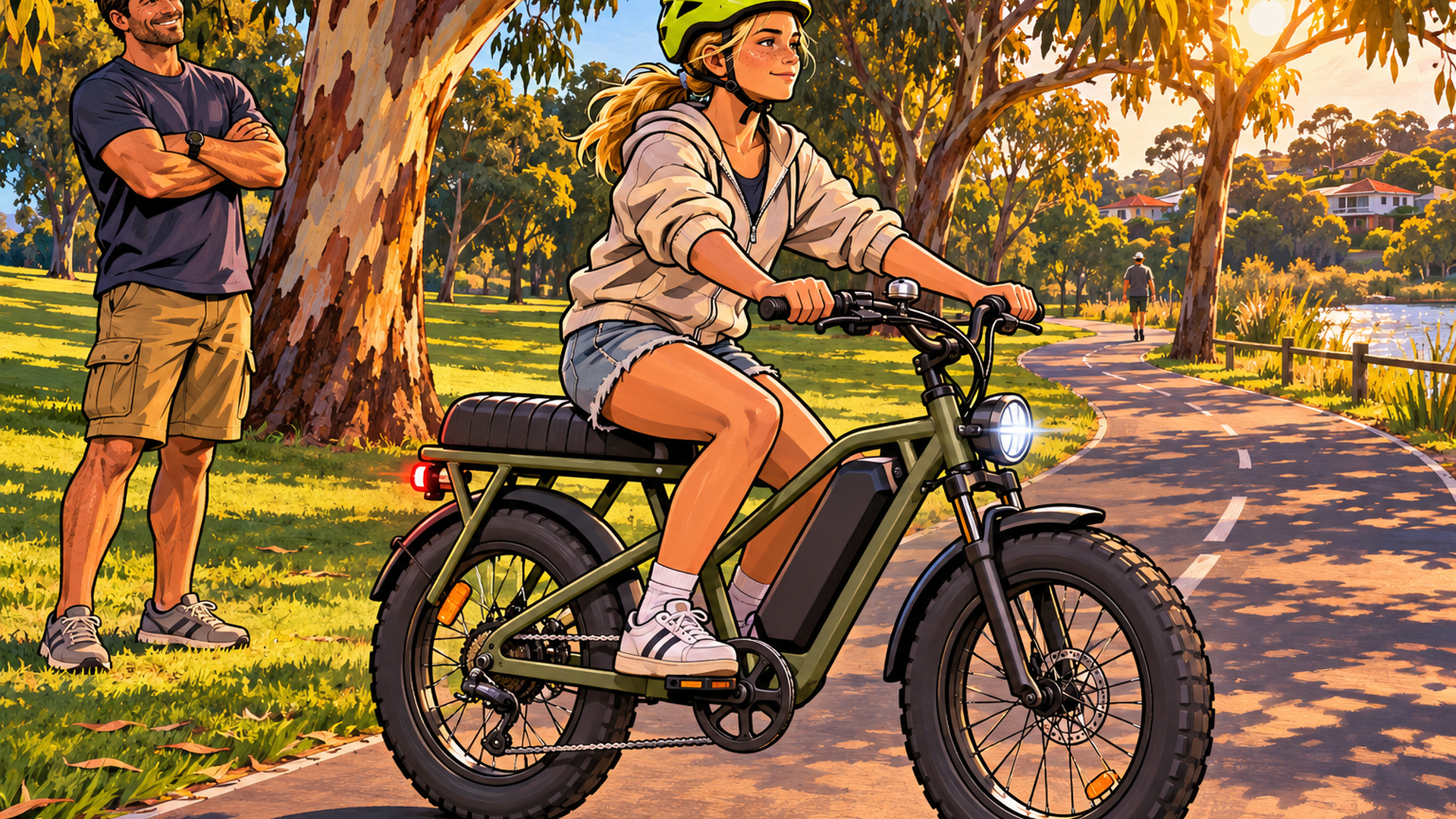
Once your teen can start, stop, turn and check behind with control, choose a permitted route with suitable riding conditions and practise it together, whether that is to a mate's place, the beach or school in 2027. NSW's safe riding advice has tips on planning a route. Practise at a similar time of day when conditions are suitable. Recheck the route together when school goes back in 2027, as traffic conditions may differ.
Point out the tricky spots as you go: driveways, side streets, roundabouts and any place where the path ends and the road begins. When your teen can manage the route safely, consider letting them lead while you stay close enough to supervise. Use what you see to decide what needs more practice.
Agree on the house rules
Agree on expectations before the first ride, then revisit them as your teen gains experience. Talk through where your teen can ride, when they need to check in, and what happens if the bike gets a flat or the battery runs low.
Agree where the bike and battery will be stored: on a hard surface that can't catch fire, away from beds, bedrooms, carpet, sofas, exits, escape paths and anything that can burn, and away from heat and moisture. FRNSW recommends a working smoke alarm, or a heat alarm where a smoke alarm can't be installed, in the area. Follow the manufacturer's storage instructions too. For charging, never charge while asleep or away from home, avoid leaving it unattended, and disconnect when full.
Write down what you agree so you can refer back to it together. Our guide to setting e-bike rules for teens with a family agreement has a simple way to do it.
Frequently asked questions
Can my teen charge their e-bike in their bedroom?
No. Fire and Rescue NSW advises against charging in or near living spaces like bedrooms or living rooms, or on beds, sofas or carpet. Charge on a hard surface that can't catch fire, in an open area like a garage or shed, away from exits, escape paths and anything that can burn, with a working smoke alarm, or a heat alarm where a smoke alarm can't be installed. Never charge while asleep or away from home, avoid leaving it unattended, and disconnect when full.
Can I leave the battery charging overnight?
No. FRNSW advises avoiding overnight charging, not charging while you are asleep or not at home, and not leaving batteries unattended while charging. Charge on a hard surface that can't catch fire, away from beds, bedrooms, carpet, sofas, exits, escape paths and anything that can burn, with a working smoke alarm, or a heat alarm where a smoke alarm can't be installed. Disconnect when full.
Does my teen's e-bike need lights?
In NSW, at night or in hazardous weather conditions causing reduced visibility, the bicycle or rider must display a white light clearly visible for at least 200 metres from the front, a red light clearly visible for at least 200 metres from the rear, and a red reflector clearly visible for at least 50 metres from the rear when lit by a vehicle's headlight on low beam. Either light may flash or stay steady. A legal e-bike ridden in NSW also needs at least one effective brake and a working bell, horn or similar warning device (NSW Road Rules 2014).
Help your teen ride smarter
BikeHero is designed to help Australian teens ride smarter and give parents peace of mind. Planned lessons include Battery Safety, Essential Gear and Traffic Rules. Find out more at bikehero.au.


